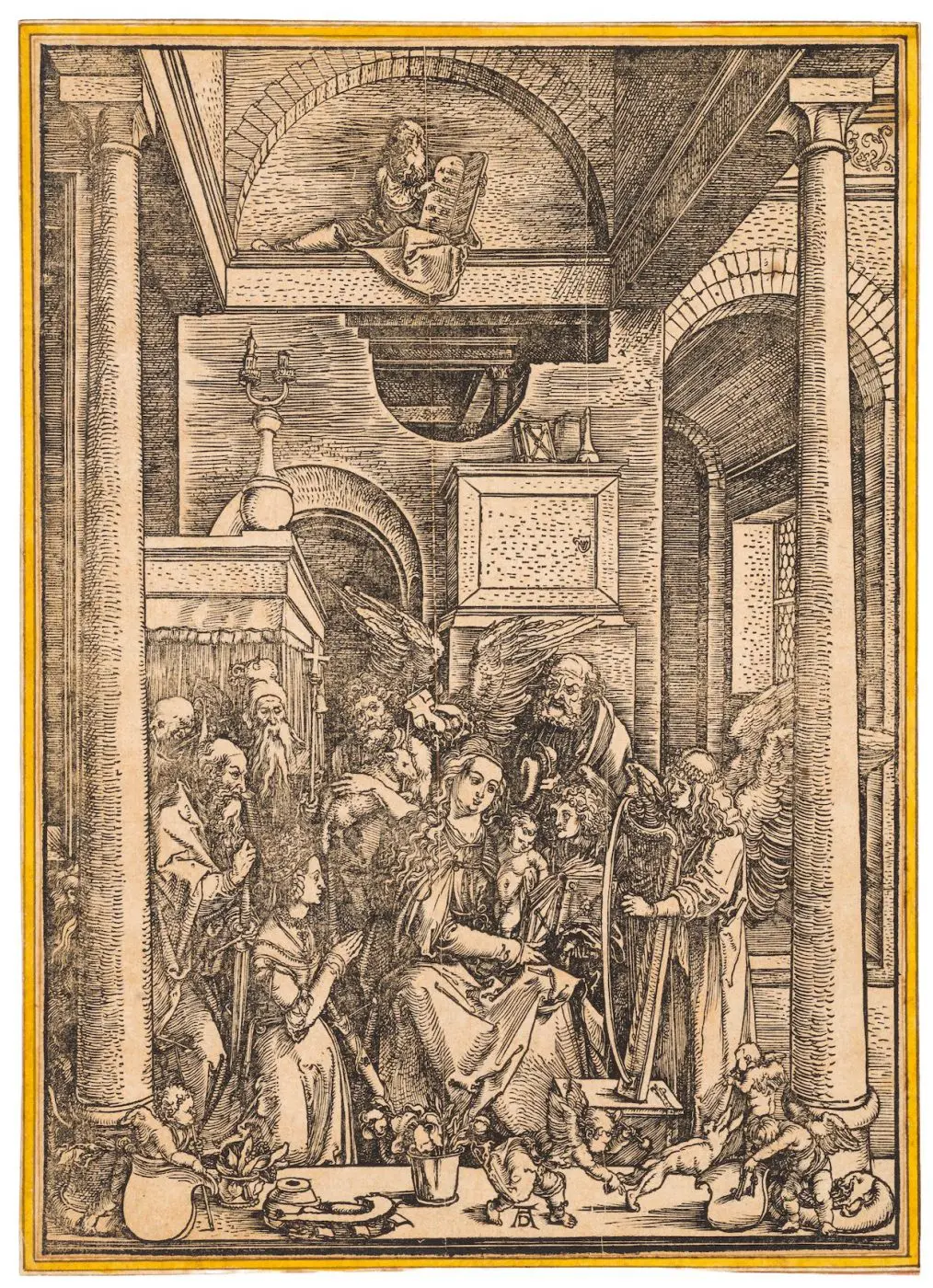
The Renaissance Museum has added to its exhibition nine engravings ceded by the Museu de Lleida, replacing the nine works exhibited since last October. This change is part of the collaboration agreement between the two institutions, which foresees the periodic renewal of the pieces to guarantee the conservation of the most delicate materials, especially those made on paper, and at the same time update the cultural contents of the museum.
The new engravings are the work of eight different authors and are mostly situated between the end of the 16th century and the first half of the 17th century. Among these, Albrecht Dürer stands out, considered one of the great masters of Renaissance engraving. The rest of the artists allow understanding the fundamental role of engraving in the dissemination of artistic models and ideas in a key era for cultural circulation in Europe.
The exhibition is organized into two differentiated spaces according to the theme of the works. On the first floor, four engravings focus on religious scenes and on the technical and formal aspects of the Renaissance, with representations such as Saint Bartholomew, the Adoration of the Virgin or the Resurrection of Christ. On the second floor, five more pieces address daily life and portraits of prominent historical figures, such as Charles V, John Foxe, Francisckus von Sickingen and Saint Ignatius of Loyola, as well as a scene from the Colloquy of Poissy of 1561, offering a broad vision of the social and cultural context of the period.
Three lots of nine engravings to rotate in the exhibition
The exhibited pieces are part of the Col·lecció Gelonch Viladegut, closely linked to the Renaissance museum project since its beginnings. Since the inauguration of the facility, eighteen engravings from this collection have already been shown, organized into three lots of nine works that alternate every six months. This rotation system allows guaranteeing the correct conservation of the pieces and, at the same time, offering a periodic renewal of the exhibition contents.
The loan of the works is carried out free of charge, thanks to the collaboration agreement with the Museum of Lleida, which cedes the works, and the City Council only assumes the expenses derived from transport, assembly and insurance, as is usual in this type of collaborations between museum institutions. The new engravings can be visited at the Renaissance museum until October 5, 2026, the date on which a new renewal of the exhibited pieces is planned.


