
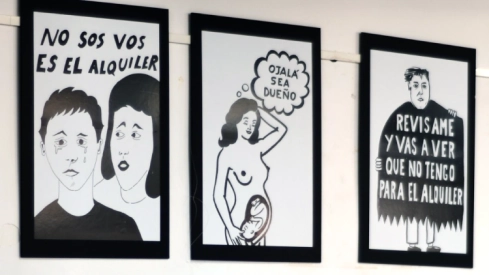
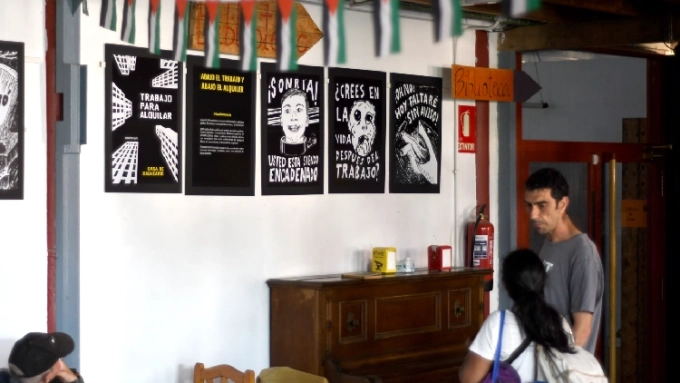
Until May 10, on the first floor of Block 11 of Can Batlló, in the Sants neighborhood of Barcelona (above the bar), an exhibition of posters by Casa de Balneario can be visited, a project of illustration and graphic activism that combines urban art, intervention, and editing, and that addresses themes such as work, money, consumerism, and the high cost of rent.
Reading of the book Trabajando para alquilar
Parallel to this exhibition, from Editorial Descontrol, the reading of the book they published a few months ago is recommended, Trabajando para alquilar, a volume edited and designed by Darío Marroche that compiles a large part of the collective's production around the problems of labor precariousness and the constant increase in rents, together with a selection of unpublished works by the author. Stickers, posters, graphic stories and interventions in public space compose a visual narrative that denounces the commodification of daily life and the precarization of housing. With acidic humor, irony and a careful graphic aesthetic, the book poses an urgent reflection on how the labor system and the real estate market intertwine to sustain a model of structural inequality.
Working to rent was published on December 1, 2025, at a time when mobilizations for the right to housing are growing in multiple cities and public policies continue without offering real solutions. The publication arrives as a graphic and political cry: an invitation to rethink the value of work and the right to inhabit.
The publishing house that makes of the books a mess
"Without means of production there is no freedom of expression; if the mobile controls you, books are 'descontrol'," this forcefully they show themselves from Editorial Descontrol, a cooperative that defines itself as "a printing press that edits and an editorial that prints".
It is a collective project that gathers the concerns of a group of people concerned about the dissemination of culture and about the social transformation of the current world, with all that surrounds it, influences it, and determines it. As they explain, they edit to transform and print to make this transformation a reality.
Its catalog includes new, old, and compiled texts, as well as books and magazines. They also work with images to convey messages in different languages and enrich publications and dissemination materials. In addition, they develop the entire editorial process —design, layout, printing, and finishing— in a cooperative work model and circular economy.


