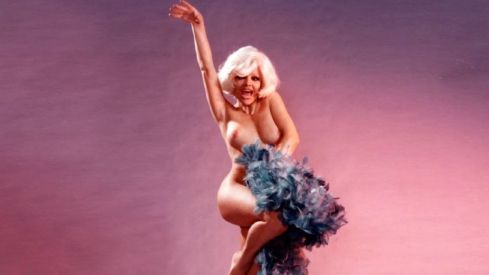
The figure of Dolly Van Doll, artistic name of Carla Follis (Turin, 1938), once again occupies the place she deserves in the history of entertainment with the inauguration of the exhibition "Dolly Van doll. L’animal sagrat del music-hall (1938 – 2025)" at the LGTBI Centre of Barcelona. The exhibition recovers for the first time unpublished photographs from her personal archive and highlights the career of one of the most innovative and courageous artists of the performing arts scene of the second half of the 20th century.
The exhibition will take place from July 9 to October 26 and as an inaugural activity, in addition to the premiere of the exhibition, a round table will be held dedicated to analyzing the figure of Dolly Van Doll and the artistic context in which she developed her career.
The exhibition recovers for the first time unpublished photographs from Dolly Van Doll's personal archive
The meeting will bring together three references of Barcelona's entertainment with national and international projection: Lita Claver "la Maña", Estefania Vidal and Cristine Berna, moderated by Rubén Antón, historian of transformism and curator of the exhibition.
The conversation will offer a privileged look at the evolution of music-hall and variety theatre in Barcelona through the testimonies of the three artists who represent different stages of this cultural phenomenon: from the revue and musical comedy of the Arnau and El Molino theatres, to the great European stages and Paral·lel as the epicentre of entertainment.
Lita Claver "la Maña", a comic vedette of Gypsy-Aragonese descent; Estefania Vidal, one of the great voices of bolero with a distinguished international career; and Cristine Berna, vedette of Paral·lel and actress in emblematic films such as El vicari d’Olot (1981), will share their memories and experiences of a Barcelona that, in a few years, went from Francoist censorship to becoming a benchmark of modernity and artistic freedom.
The inauguration and the round table will be this Thursday at 6 p.m. and will have a Catalan sign language interpretation service.
The career of Dolly Van Doll
Carla Follis toured international stages with a goal that she herself summarized in a phrase: "to make people happy." This spirit, captured in her own voice within the historical memory project Drag is Burning, also gives title to the exhibition and summarizes the essence of an artist who marked several generations.
Dolly Van Doll was a key figure in the transformation of Barcelona's music hall. From the Barcelona de Nit of the old Chinese Quarter to the Belle Époque cabarets of Barcelona and Valencia, she contributed to modernizing the show, consolidating a scenic language that anticipated the cultural changes that would arrive with the Transition. Thus, her influence turned the stages into spaces of fantasy, discipline, and freedom, inspiring those who found in her a reference of authenticity and possibilities.


