
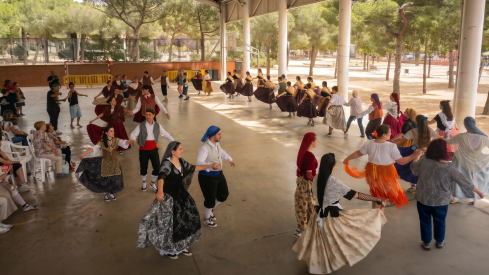
There are traditions preserved in books, others in oral memory. But there are some that only survive when someone dances them. This Sunday, June 7, the Conxita Udina Indoor Track in Esplugues de Llobregat will become, once again, the stage for this exercise in shared memory with the celebration of the 25th Esplugues Traditional Dance Festival.
The event, free and open to all audiences, will take place from 11 AM to 12:30 PM and will bring together the Dance Corps of the Esbart Vila d’Esplugues with three invited groups: the Esbart Dansaire de Sant Joan Despí, the Esbart Dansaire de Vacarisses, and the Esbart Gaudí. Each group will present a selection of two or three dances, with their characteristic costumes and their own ways of understanding the language of movement.
Despite its modest dimensions, the festival has consolidated itself as a beloved event within the local cultural calendar. Various representatives of the Esbart explain that the aim has always been the same: to invite high-level groups and offer the public a diverse sample of traditional Catalan and creative dance.
A quarter century of shared dance
The history of the festival dates back to May 14, 2000, when it was born under the name of Esplugues Traditional and Popular Dance Festival. That first edition was held at the Pista Vermella of Pou d’en Fèlix park, with live music by a cobla and the participation of the Esbart de Sant Feliu.
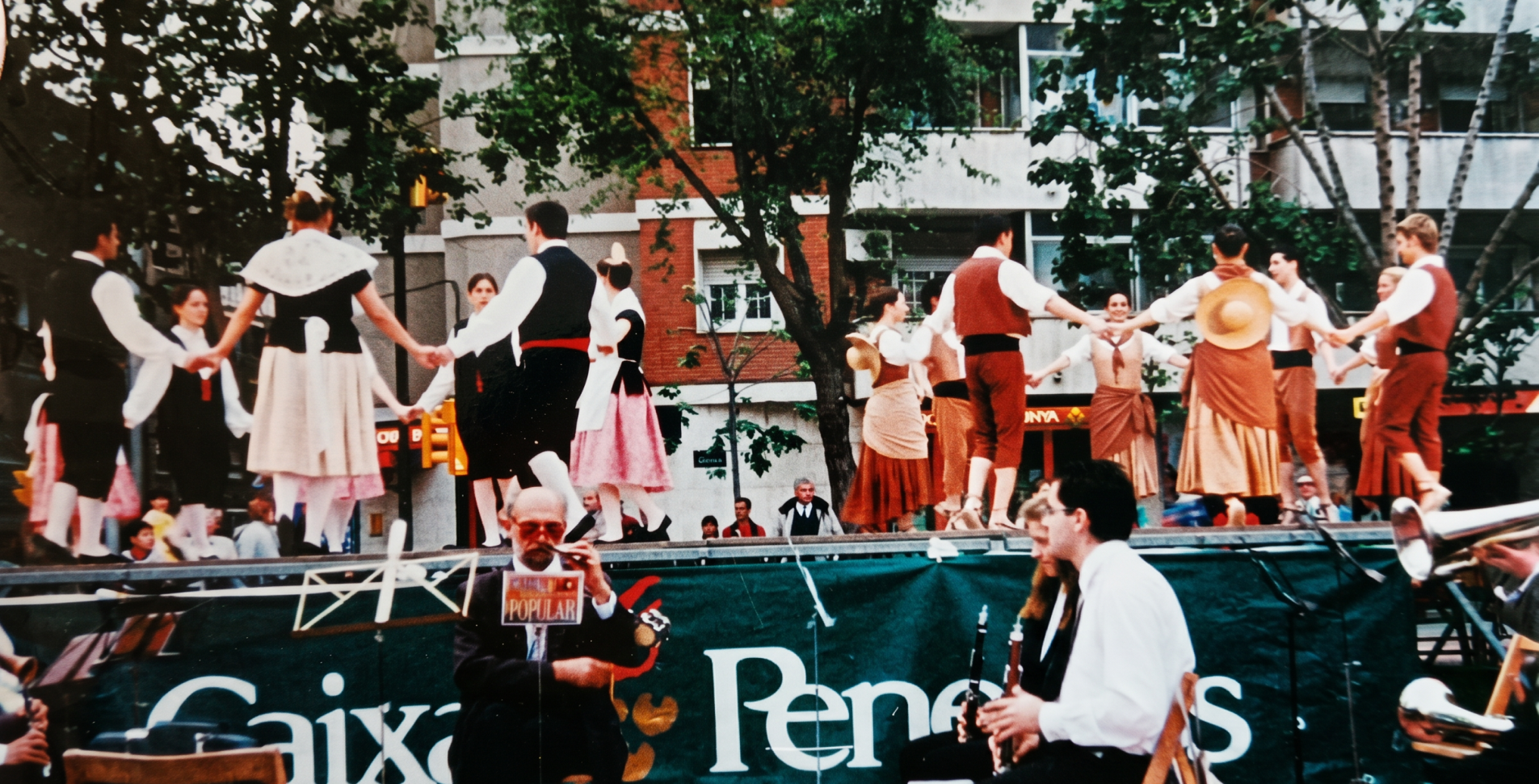
Over the years, the proposal has evolved at the same pace as the entity. The incorporation of creative dance pieces led the festival to progressively abandon its more strictly traditional definition. Perspectives and horizons were also broadened, inviting groups from territories as diverse as Mallorca, France, Hungary, Segovia, or Murcia.
The trajectory has only been interrupted on two occasions: in 2020, due to the pandemic, and in 2023, due to organizational difficulties. Recovered in 2024, the festival now reaches its 25th edition with the desire to continue growing without losing its essence.
Esplugues and Sant Joan Despí: neighboring municipalities and, now, also dance companions
One of this year's novelties will be the presentation of two joint dances performed by members of the Esbart Vila d’Esplugues and the Esbart Dansaire de Sant Joan Despí. The initiative is the result of an exchange developed during this course, with shared rehearsals that have allowed working on choreographies that require a large number of dancers.
Among the pieces that can be seen will also be Marina, a creation dance that exemplifies this coexistence between heritage and contemporaneity that characterizes many of today's esbarts.
The day will also reserve some surprises for the invited groups. The entity has prepared commemorative souvenirs handcrafted at EspluLab, Esplugues' digital fabrication space, using 3D printing and laser cutting techniques. We won't reveal anything else… we have to keep the secret until the moment of delivery!
An entity that doesn't stop
Founded in 1985, the Esbart Vila d’Esplugues is one of the most active cultural entities in the municipality. Throughout the year, it participates in celebrations such as the main festivals of Sant Mateu and Santa Magdalena, organizes the Gran Ballada de Festa Major, promotes the musical show The Legend of Saint George and promotes activities for children and families.
Its history also includes participations in high-profile events, such as the opening ceremony of the Barcelona 1992 Olympic Games, the Forum of Cultures or the opera-collage L’Home del Paraigua at Palau Sant Jordi.
But, beyond the big stages, its raison d'être continues to be found in spaces like this festival: a gathering where dances are passed down from generation to generation, where costumes tell stories and where popular culture is made present through bodies.
As is tradition, the morning will culminate with the Ball del Babau, Esplugues' popular dance, which will bring together the participating esbarts and the attending public on the dance floor. A symbolic way to close the festival: dancing together, so that traditions continue to walk towards the future.


