
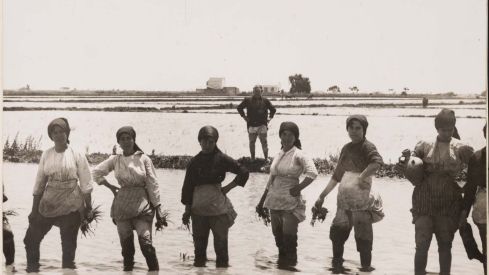
The session explored how archives allow to reconstruct trajectories and experiences often invisibilized and dismantle the myths that have been forged around women's work: that the man was the main provider of the home and the woman depended economically on him, that middle-class women did not work due to their identification with the model of domesticity or that guilds were specific spaces for men.
As Cristina Borderías points out, doctor in Modern and Contemporary History and emeritus professor at the University of Barcelona, women have always worked, despite all the myths, in different sectors such as textiles, domestic service, the countryside or factories, and she recalls how they fought and organized themselves collectively.
“The marital status, the number of children, the husband's salary or the educational level were not determining factors for a woman when it came to working. If there was work, women responded positively to this demand,” Borderías pointed out, who highlighted that “the Catalan economy would not have been able to grow as it has done if it had not been for the work of women.”
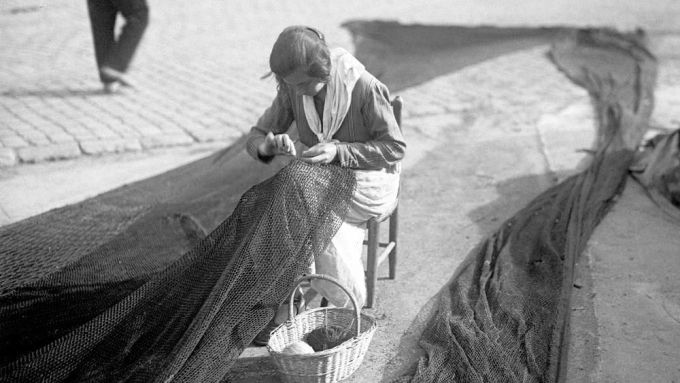
Both Borderías and Tura Tusell, doctor in Contemporary History from the University of Barcelona, and the head of public access, consultation and dissemination of the Archive and Document Management Office of the Barcelona Provincial Council, Alicia Xicota, conversed about the documentary sources to make this work visible.
Some of the topics that were discussed were the sexual division of labor, wage inequalities, the particular difficulties in studying domestic work and professional care, the role of oral sources to fill documentary gaps, and the alliances between the research community and archives to advance towards more complete, accessible, and gender-perspective research.
On the one hand, Tusell highlighted the work of care, "a job that we cannot quantify in certain periods but that was very important for many families who needed income", and thanked the work of archivists who "are the ones who really know the documentation and the sources with which we can investigate".
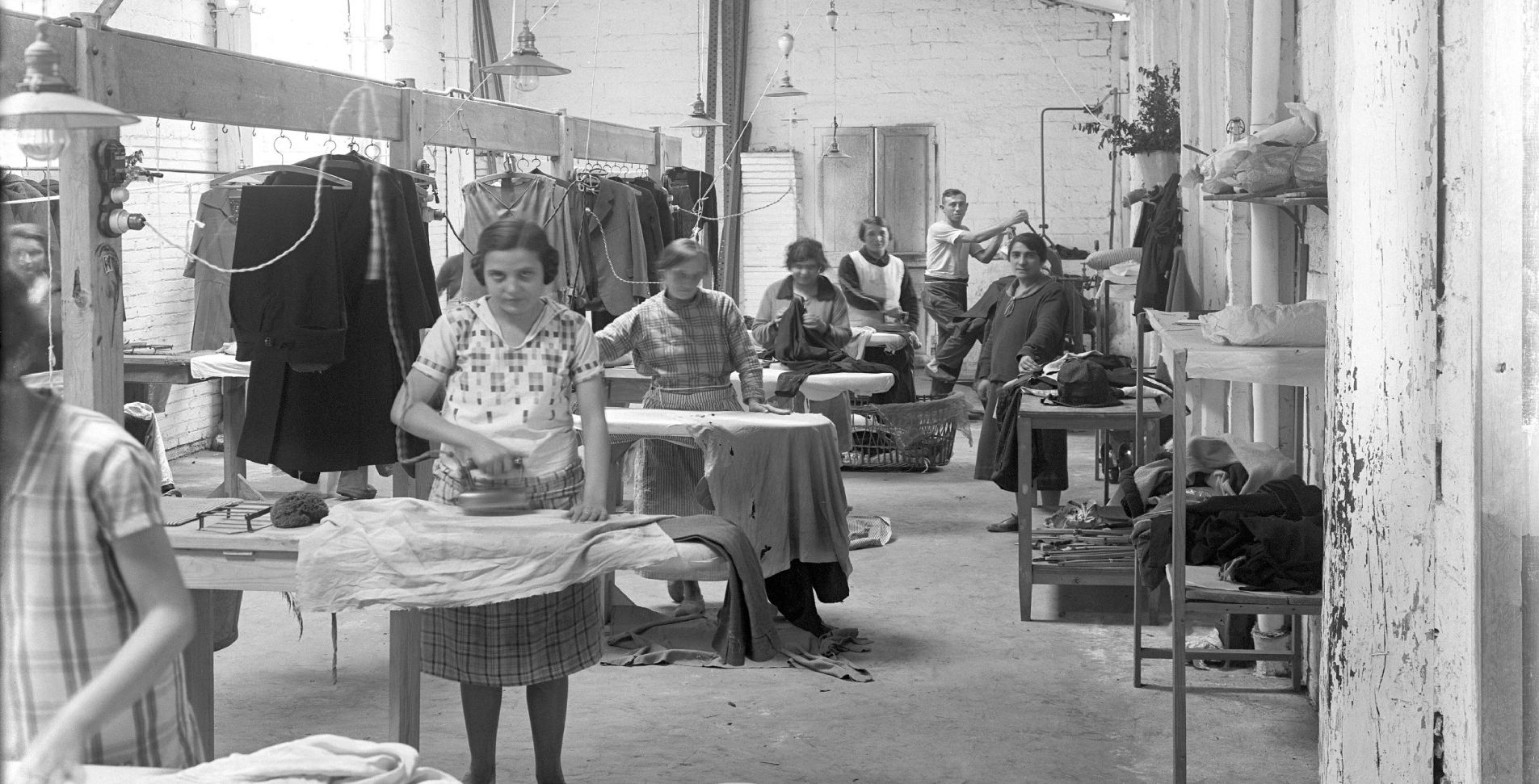
Alicia Xicota, for her part, recalled some of the projects that are being carried out through the General Archive of the Barcelona Provincial Council (AGDB), such as the recovery of the oral memory of the Maternity Home. She also highlighted how the training and professionalization centers, such as the Institute of Culture or the Women's School, have been key to understanding women's access to new trades and the processes of labor transformation.
Also relevant is what Jordi Vilamala Salvans, head of the Office of Archive and Document Management, mentioned: “from the AGDB we are reviewing methodologies and techniques to recover, in a differentiated way, information referring to women and men. The objective is to facilitate research based on disaggregated data that help researchers to better know our history.”
Transversal Gender Plan of the AGDB: a pioneering tool
This historical dissemination event is part of the execution of the General Archive of the Barcelona Provincial Council's Transversal Gender Plan 2024-2028, promoted with the collaboration of the Feminisms and Equality Area. It is a pioneering and strategic initiative to apply the intersectional gender perspective to all archive and document management processes, techniques, and policies, as well as to dissemination and research actions.
Among its objectives are actions such as establishing synergies with the Area of Feminisms and Equality to contribute to the promotion of women's knowledge; designing and disseminating research lines on women, gender equality, feminisms and other underrepresented collectives or defining the policy for the acquisition of funds and collections.
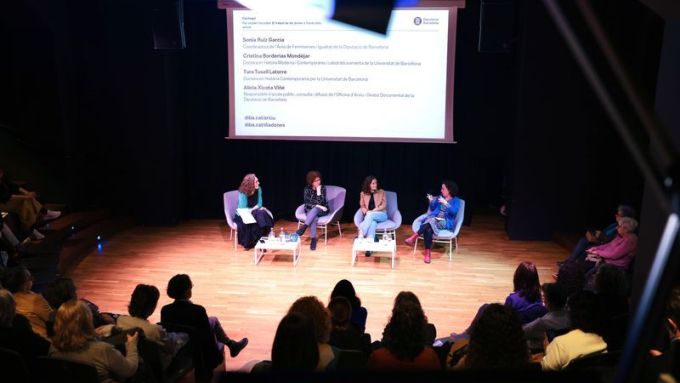
The gender perspective in all areas of the Barcelona Provincial Council
The event served to close the institutional 8M campaign of the Barcelona Provincial Council, which under the slogan “Feminist attitude. Let's make equality possible”, has highlighted intersectional gender mainstreaming as an essential strategy to improve the quality and effectiveness of public policies.
The deputy for Feminisms and Equality, Raquel Albiol i Gilabert, recalled during the event that gender mainstreaming “is one of our priority strategic lines”, and that from the Barcelona Provincial Council “we work to incorporate this feminist perspective into all public policies, and this conference is a good example of how this mainstreaming translates into concrete projects”.
Currently, the Barcelona Provincial Council leads more than 30 projects that incorporate this strategy and that involve 13 areas of the corporation, from facilities and services such as libraries and natural parks to areas such as feminist economy, urban planning, public space, data, culture and historical memory, as in this case.


