
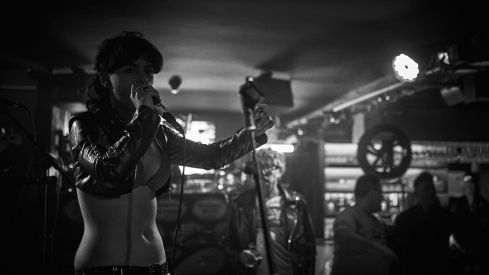
There is a Catalan region that has always been a territory of music. In fact, the vast majority of artists who have triumphed in recent decades have roots in this place: Rosalía, Aitana, Estopa… To name a few. Surely, many of you already know which region we are talking about: the Baix Llobregat. A crossroads, of factories, of working-class neighborhoods and of people from all over who, despite living on the periphery of Barcelona, have built their own, intense and combative cultural identity. Some consider it the backyard of the Catalan capital, but for the cultural world it is, simply, fertile ground. And it is that, beyond being one of the main vegetable producing areas of Catalonia, it is also where most rock groups have been born and have cultivated their future. They are counted by the dozens.
The question, then, is inevitable: Why here? Why is it the most rock-and-roll region in the country? Everyone we contacted for the report agrees: the Baix is the cradle of rock in our home. And this is not a coincidence.
From the industrial to the musical revolution
The industrial and working-class character of this region is key to understanding it. Oliver Granadal, guitarist of Golden Rocks, from Sant Joan Despí, believes that behind this rock concentration there is above all the spirit of rebellion and popular struggle that so characterizes the people of Baix Llobregat: “Especially in the eighties, the Baix was a working-class and quite activist town. This, and the fact that we had recently emerged from a dictatorship and there was total repression, generated a very active cultural movement that sought references in other countries such as the United Kingdom or the United States.” In fact, rock is a musical genre that emerged in the fifties in the USA and evolved into many styles in the sixties, reaching our days with a wide range of proposals and possibilities. Its lyrics often overflow with romantic love, but also cover a wide spectrum that leans towards political and social issues.
Oliver Granadal: “In the eighties, the Baix Llobregat was a working-class and quite activist area. The end of the dictatorship generated a very active cultural movement”
Rock is not just a style, "it's a way of life that involves a constant challenge, often also to the most oppressive political and social conventions. That's why it's normal that, traditionally, it has been associated with the outskirts and working-class neighborhoods." This is according to Alicia Rodríguez, a journalist and music promoter, and one of the teachers who annually teaches the Santako School of Rock, at the UB's Juliols, summer training courses. Rodríguez explains that, in her classes, Baix Llobregat is very present.
Cultural Mix
The massive arrival of people from different parts of Spain between the 1940s and 1970s, motivated by the need for labor in a region undergoing full industrialization, favored an enriching cultural mix, explains Ernesto Barba, a native of Sant Boi and the longest-serving active music journalist for Ruta 66 magazine. This process, according to Barba, not only contributed to the proliferation of rock bands but also to the emergence of multiple artistic manifestations that have made Baix Llobregat a prominent cultural hub. The journalist adds that rock has traditionally been a tool for expression for working classes and the most disadvantaged groups; a link that remains relevant today as a form of cultural and political resistance.
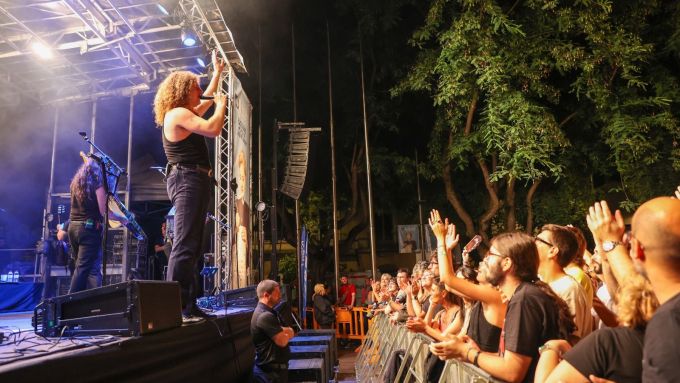
In this context, the musical scene of the region also played a central role within what was historically known as Barcelona's red belt, due to the working-class profile of its citizens and their political preferences. Journalist Eduard Cabré, one of the members of the Ràdio Castelldefels program Lou Reed ha muerto, recalls how the Baix was a territory where counterculture and social protest manifested strongly: "Young people, witnesses to the agony of Francoism and the resistance of the elites to retain power, found in music and fanzines tools to channel their protest and express their identity." "Thus, rock and punk became instruments of struggle and social cohesion," he insists.
Eduard Cabré: "In the Baix, music is breathed. You won't find it advertised big, but if you look for it, there are venues in every town where live music can be seen
In parallel, the society that began to be built in that era of the end of the dictatorship and the beginning of democracy also had a more open, urban, and cosmopolitan mentality, “with very marked cultural concerns, visible in the diversity of alternative musical genres linked to rock,” states Aleix Costa, guitarist of the band Ratpenat and president of the Esplurock association.
A very extensive rock family
Rock in Baix has a lot of history. There is an infinite list of bands and musicians who have built their careers around this musical genre. Many names, some of whom still go on stage, and others who, unfortunately, have already left us.
In Cornellà, groups like the legendary La Banda Trapera del Río, born in the Sant Ildefons neighborhood and considered pioneers in urban rock, paved the way. It has been just two years since its founder and vocalist, Morfi Grei, died. He turned punk into a cry of social resistance, with lyrics that expressed the rage of working-class reality, with songs like Ciudad Podrida. “We could name an infinity of groups linked to rock in our region, but those who mark a before and after are them,” defends Costa.
Alicia Rodríguez: “Rock is a way of life that implies a constant challenge to conventions. That’s why it’s normal that it has been associated with the outskirts and working-class neighborhoods”
Besides the Cornellà natives, some of the other essential names to understand this musical scene of the seventies, eighties, and nineties are Decibelios, La Chusma, Último Resorte, Desechables, Neurastenia, among others. All of them shared rage against the system and a strong class consciousness. In parallel, other currents like the mod movement also left their mark, with groups like Kamenbert, Sprays, or Extra.
In the nineties, the bands that emerged were already more oriented towards pop, with groups like Love of Lesbian, Sidonie, or Beef, as well as other less known formations but with attractive proposals like Phila, Valium, or Perruzo, promoted by young people with creative concerns.
Infinity of events with live rock
The rock scene of Baix Llobregat, however, is not just history, but remains alive thanks to the transmission of its values and the passion of those who participate in it. This is due to the stubbornness of rockers, says Granadal, who acknowledges that old rockers find it hard to retire. However, he is proud that rock is still very much alive among the public and new generations, which means that the values of rebellion, unity, friendship, and struggle have been successfully transmitted to young people.
Cultural life in the region is intense. Barba emphasizes that "it is impossible to enjoy all the proposals that are programmed," both from public spaces and from entities and associations. "In Baix, music breathes. You won't find it advertised big, but if you look for it, there are venues in every town where you can see live music," shares Cabré. Sant Boi is a clear example, with Espai Weller, Les Muses, or Rubrifolkum, which organize concerts throughout the year. Other reference points are La Capsa del Prat, Els Pagesos de Sant Feliu, or Sala Padró de Cornellà. These venues have been key to maintaining this entire musical ecosystem, along with Salamandra or the mythical Vértigo, now defunct.
Apart from the venues, a multitude of events, concerts, and festivals are also held, filling the agendas of all the municipalities in the region, such as CanviRock (Esplugues), Can Mercader Festival (Cornellà), Rojinegro (Cornellà), Rock&Baix (Sant Joan Despí), or Move Your Fuckin Brain (Molins de Rei), which show us that there is still a strong rock scene in Baix. The Altaveu Festival of Sant Boi should also be mentioned, which features local artists: in the last edition, it did so with the group Bons Nois from Sant Feliu de Llobregat. Not to mention the Esplurock Fest, which this year celebrates its first twenty years of life and has already established itself as one of the musical reference spaces in the region.
Julieta Cabré: "Sooner or later you fall dazzled by the wonder that is and the diversity of subgenres and artists that the world of rock encompasses"
Local radio stations have also played and continue to play a key role in the dissemination of all this regional rock music, such as Ràdio Sant Andreu, in Sant Andreu de la Barca, with the program Hysteria, led by Satur Rodríguez, and the concerts they organize every year at the Ermita de Santa Madrona, where artists of the stature of Ñu or Susan Santos have performed. In 1994, they even had the pleasure of Extremoduro.
In Castelldefels, at its local radio station, rock also has a place with the program already mentioned before, Lou Reed Ha Muerto, hosted by Cabré. Every Thursday evening they transport listeners to an imaginary island populated by the "exquisite corpses" of rock stars. From this spirit the Lou Reed Ha Muerto Fest is born, which is held at Castelldefels Castle.
An intergenerational reality
It is precisely in this city where we find one of the generational reliefs of rock in the Baix. With only fifteen and sixteen years old they already make noise. They are Estamviskun, with Julieta, Martina, Mario and Casto, a combative punk-rock band with their own songs and class consciousness. "All of us have had contact with rock since we were little and, whether you like it or not, if your environment puts you into the world of rock, sooner or later you fall dazzled by the wonder that it is and the diversity of subgenres and artists it encompasses," says Julieta Cabré, the group's vocalist.
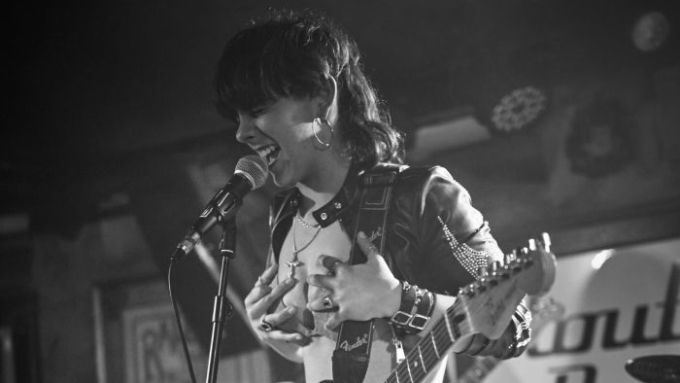
On the other side of the mirror are The Blue Majer's, in El Prat de Llobregat, a group formed by veteran musicians aged over sixty, seventy and eighty who continue to rehearse every Monday at La Capsa. They also carry out an important pedagogical task by bringing rock to schools and explaining all the adventures they have experienced around music. And they are emphatic about the continuity of this musical genre. "Rock will never die," they affirm with conviction. A rock cry shared by journalist Alicia Rodríguez, who states that this musical genre survives, sometimes outside the media spotlight, because it has its own network that keeps it alive and away from musical cycles and trends.
Apparently, then, in Baix Llobregat, if we talk about rock, everything is tied and well tied. If there is a musical style that crosses its entire cultural history from top to bottom like an electric thread, it is this one. A region that can be considered the cradle of rock in our country.


