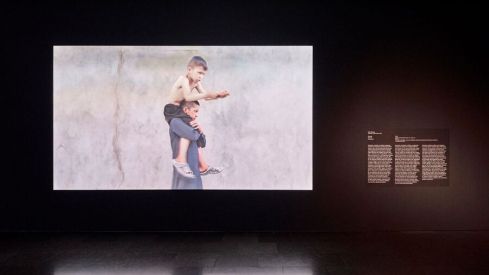
Moving images can function as evidence and as historical memory. Video is not only a means of recording but a way of activating narratives, generating critical thought, and giving visibility to realities often absent from official narratives. MACBA, in its triple exhibition called The Gesture of Filming. Video in the MACBA Collection, vindicates the role of video as an artistic language and as an instrument of social transformation. Starting on July 9, the collection proposes delving into the imaginary of Pere Portabella, reinforcing the value of the legacy of Video-Nou, and discovering newly created pieces promoted by the Han Nefkens foundation.
The three exhibition projects that can be visited cover different moments and ways of understanding video as an artistic language and as an instrument of social transformation: Counter-information. Video-Nou / Community Video Service, Echoes. Videos from the Han Nefkens Foundation donation and Pere Portabella. The Committed Gaze. Despite responding to different historical contexts and practices, the three proposals explore the fundamental potential of the moving image and share the same perspective.
The first proposal, Counter-information. Video-Nou / Community Video Service, exhibits a selection of works produced during the first years of the Transition. The collection highlights the pioneering experience of this collective, which transformed the camera into a tool for community participation and critical documentation of social, labor, and neighborhood movements at a decisive moment in recent history.
The exhibition continues with a selection of works by contemporary artists that expand the narrative and formal possibilities of the moving image. Echoes. Videos from the Han Nefkens Foundation donation, explores experimental languages to address social, political, and intimate issues through non-linear narratives, superimpositions of images, and new forms of visual experience.
Finally, the tour is completed with Pere Portabella. The Committed Gaze, a program of screenings that is part of the "Portabella Action" framework. The exhibition will allow visitors to explore the work of the Catalan filmmaker, marked by cinematographic radicalism. His work has questioned the traditional codes of film language and maintains a profound political and experimental dimension.
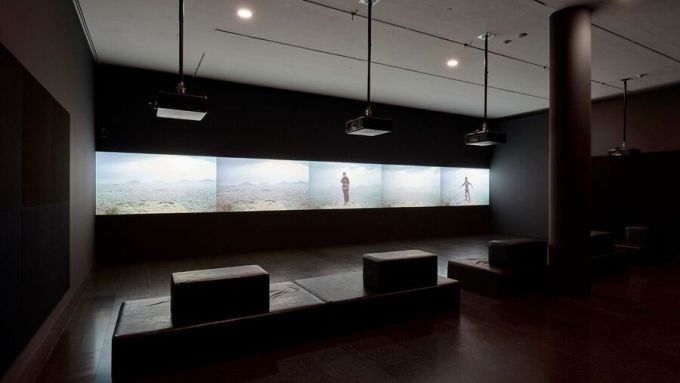
The Gesture of Filming. Video in the MACBA Collection is part of the museum's ongoing work to activate the MACBA Collection from different approaches that allow for dialogues between artistic practices, historical contexts, and the debates that traverse contemporary society. With this triple proposal, the museum proposes a reflection on the critical potential of the moving image and its capacity to construct collective memory, generate spaces for debate, and establish new forms of relationship between document, testimony, and experience.


