
The Culture Area of the Barcelona Provincial Council and the Network of Local Museums link the 6th edition of the project Memory in Network, with the thematic title The first steps towards democracy (1976-1978) in which 24 local museums of Catalonia participate, with different exhibitions of historical facts, contents, objects and documents of the cultural heritage of the different areas, dedicated to the beginnings of the Democratic Transition. In the case of Santa Coloma, the Torre Balldovina Museum hosts until April 30 the exhibition The origins of feminist associativism in Santa Coloma de Gramenet.
The exhibition in Santa Coloma explains the birth of the first feminist association in the city, on March 14, 1975, with the first statutes of the Asociación de Amas de Casa de Singuerlín, which three years later would become the Asociación de Mujeres de Singuerlín. A pioneering association, focused on the active struggle for a new role for women, during the Transition, and which defended rights such as divorce, abortion, literacy, legal and wage equality and sexual education, among many other examples, in addition to serving as a meeting space for the women of the time and to share their concerns. “We were women who in times of shadow created flashes of light with violet tones,” explains Alicia Ruzafa from the Asociación de Mujeres de Singuerlín.
“The exhibition in Santa Coloma narrates the events of the city that developed into the first feminist associations”, explained the head of the Office of Cultural Heritage (OPC), Aurèlia Cabot, during the inauguration of the exhibition.
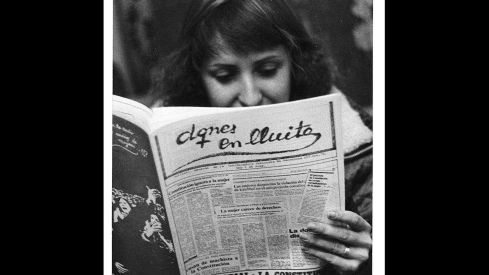
The concerns of women were laid out in the creation of the bulletin Woman, together with other women who were part of the neighborhood associations of the city and who articulated the voice of women, then silenced by the dictatorship.
The curator of the exhibition, Joan Francès, also expressed at the inauguration, that the edition in Santa Coloma aims to explain history for “a future in feminine”.


