
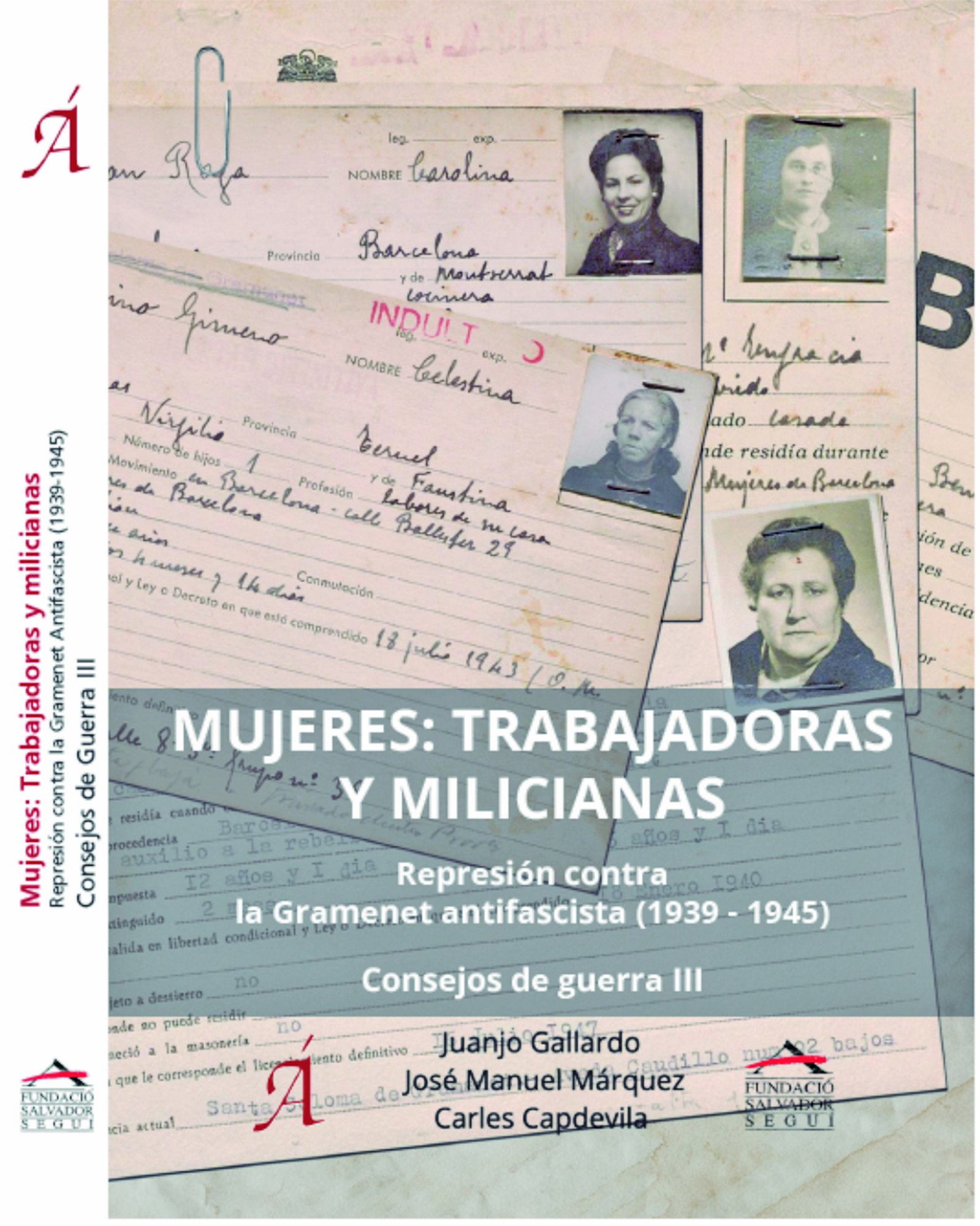
Francoist repression not only punished combatants and political leaders, but also anonymous groups who played an active role in the anti-fascist struggle. A new historical study aims to shed light on these defiant trajectories against the regime. Titled Mujeres: trabajadoras y milicianas (Women: Workers and Militias), it is a work by historians Juanjo Gallardo, José Manuel Márquez, and Carles Capdevila who delve into the judicial and penitentiary persecution carried out against women linked to the anti-fascist movement in Santa Coloma de Gramenet.
The book will be presented on January 29, at 6:30 PM, at the Torre Balldovina Museum. The study gathers diverse trajectories: while some of those prosecuted were acquitted, others received long prison sentences and, in some cases, the repression had fatal consequences, as in the case of Julia Romera, a trade unionist and CNT militant, who died in prison.
Third volume on the anti-fascist struggle
This volume is part of a broader research project on Francoist repression in anti-fascist Gramenet, following publications dedicated to Republican Left militants and the Union of Anti-fascist Youth. On this occasion, the authors focus on 28 women who were prosecuted in war councils after the end of the Civil War, highlighting the harshness and scope of repression also on female bodies and lives.
Mujeres: trabajadoras y milicianas vindicates the active role of women in the anti-fascist struggle, both in the political and union spheres and in the context of war. The book documents actions of protests in the streets during the early days of the war, participation in labor conflicts in factories, as well as the presence of women from Gramenet in Republican military expeditions, at the front or in healthcare roles.
A relevant contribution, according to the authors, to the recovery of democratic memory and to understanding the often-silenced commitment of women in the anti-fascist resistance during the Civil War and the long Francoist post-war period.


