There are wars that occupy covers, screens and conversations for weeks. There are others that only appear as brief notes, that cross our ear whispering, almost imperceptibly. How will the stories that today remain on the margins shape the future? This is one of the questions addressed by Orwell Day 2026, which this year the CCCB presents under the title “Against Erasure: The Stories We Leave You”, from May 11 to June 17.
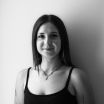
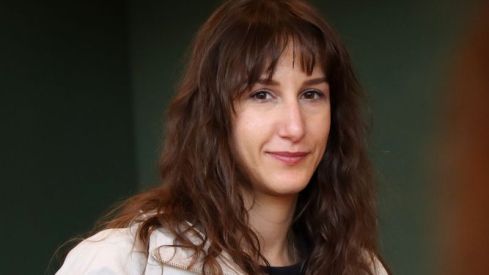
The cycle takes George Orwell not only as author of Homage to Catalonia, but as an uncomfortable witness of history. Orwell wrote from the war, facing the forms of manipulation that turn language into a tool of power. In this edition, the CCCB places this legacy in the present and shifts it towards an urgent question: where does journalism remain if it does not focus on the blind spots? A dialogue that will take shape at the hands of the journalists Mariam Barghouti, Zeinab Salih and Laila Al-Arian
The inauguration of the cycle will be given by Mariam Barghouti, a Palestinian journalist residing in the West Bank, with the conference “Orwell and Palestine: language as a weapon”. Barghouti starts from her direct experience on the ground to speak about the testimony in the face of the language of dehumanization. The journalist raises how violence is found in the thefts of time that checkpoints entail, or in the forced detours from one village to another, to highlight the role of journalism as a necessary tool.
Palestine has become a space where segregation and citizen exclusion are commonplace, and where journalism is no longer a close and human dissemination tool, but one more means to count deaths and saturate the population with inconsequential and superficial news that hide the realities of an entire people. And many times, it is the journalists themselves who find themselves obliged to adopt this new role, as Mariam Barghouti commented: “Emotionally it is very hard, you constantly ask yourself if you should continue reporting on the conflict. It's strange, because I feel that I myself have had to dehumanize Palestinians and turn them into numbers.”
On June 10, the cycle will continue with “When war is a footnote”, a conversation between Zeinab Salih and Mariam Barghouti, where the two journalists will dialogue about their experience reporting from Palestine, Sudan and other territories, in order to address how journalism relegates geographies from the margins from the international agenda.
On June 17, Laila Al-Arian and Mariam Barghouti will continue the cycle of conversations with “The price of continuing to tell the truth”, in which they will focus on the challenges of reporting on Palestine, placing the focus on the role of testimony in the era of images, and the biases that affect media credibility. A dialogue that is imperative in a present saturated with images. Never had we been witnesses to so many wars, so many ruins or so many wounded bodies, all of them circulating through screens. And within this framework, voices are needed that interpret, contextualize and act as a counterpoint to official narratives. Journalists are needed who do not limit themselves to showing the world, but who question why some fragments prevail over others.
Because behind the journalism and media fatigue, as Sofia Vilella says in this article in Núvol, there also work close voices that challenge the official narrative that is intended to be mediatized. Voices, however, that are seen increasingly silenced and controlled. «Simply, we continue working to overcome media fatigue, because there is no other option. We are not only reporters, we are also reported; we live the violence firsthand», explains Barghouti.
Beyond the central debates, Orwell Day also maintains the link with Barcelona. Between May 24 and June 18, the CCCB proposes routes and activities to retrace the author's settings, with cultural itineraries that start from Drassanes and end at Cafè Moka, a space linked to the Orwellian memory of the Catalan city.
The program also includes the activity “Camus-Orwell: a postponed conversation”, on June 11 at the Reial Acadèmia de Ciències i Arts de Barcelona, which imagines the dialogue that Albert Camus and George Orwell did not manage to have, but which their time seemed to demand. The proposal starts from the book Le song des esprits libres, by Alexis Lager, to reactivate a possible conversation about war, justice, decolonization, literature, and politics.
As a closing event, on June 22 will be screened Hommage à la Catalogne, the documentary by Frédéric Goldbronn that combines fragments of Orwell's work with archive images of the Civil War. The session will feature an introduction by Fernando Casal and Miquel Berga (author of Eileen. Portrait of a Marriage (Edicions 62), who contextualize the film and the relevance of Orwellian thought.
The Orwell Day 2026 is not limited to commemorating the author, but invites to read the present, giving voice to those stories that remain buried under the news of the mass media. And George Orwell serves to tell us that it is not just about looking at the world, but about asking ourselves what stories we have learned to stop looking at. The CCCB and the journalists Mariam Barghouti, Zeinab Salih and Laila Al-Arian will bring us closer to the culture and reality of journalism. You can already consult the entire program on the web.


