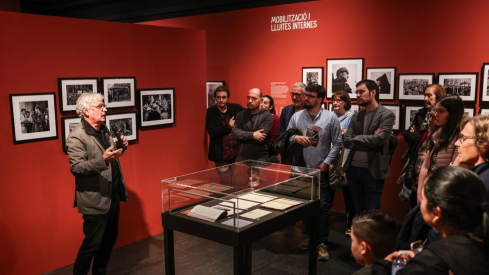
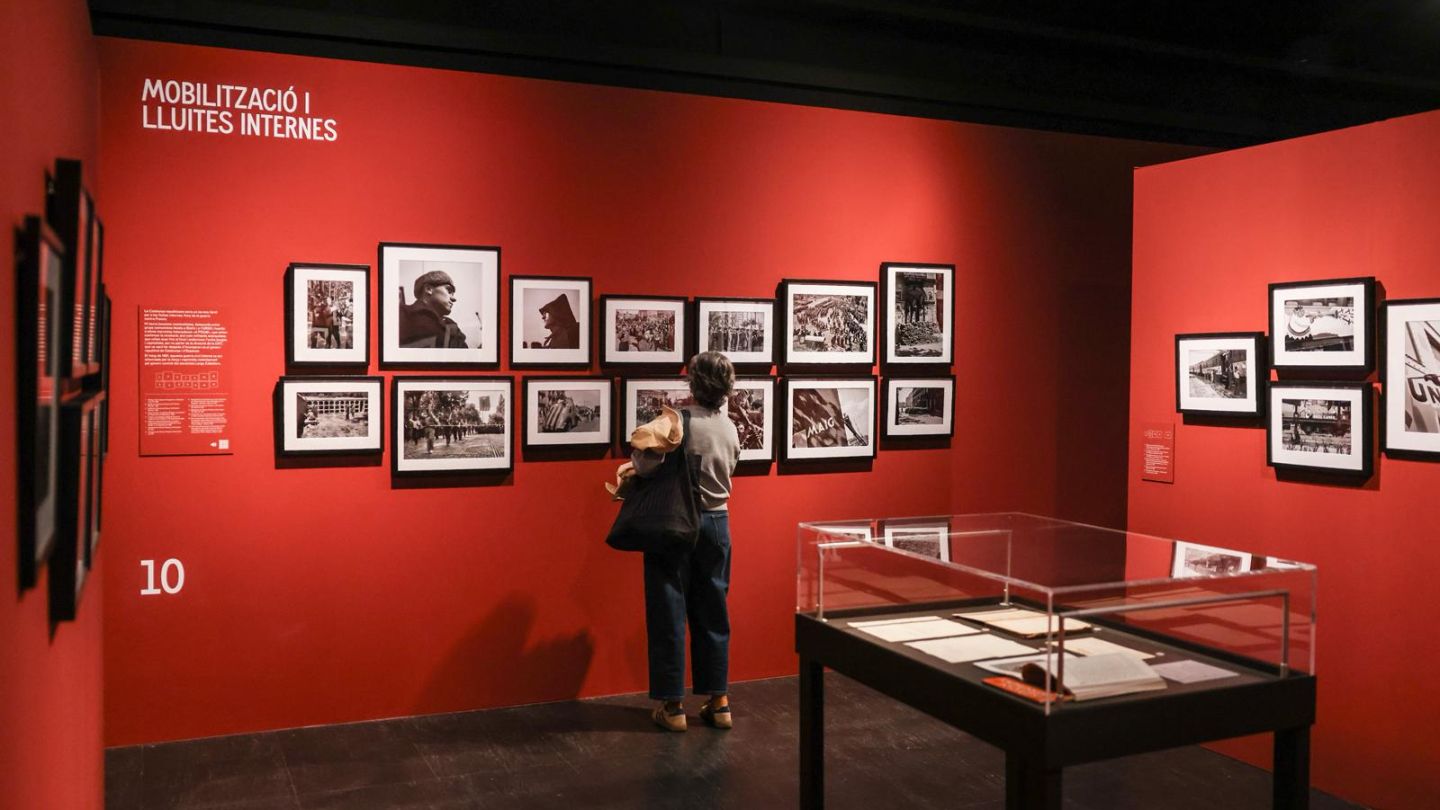
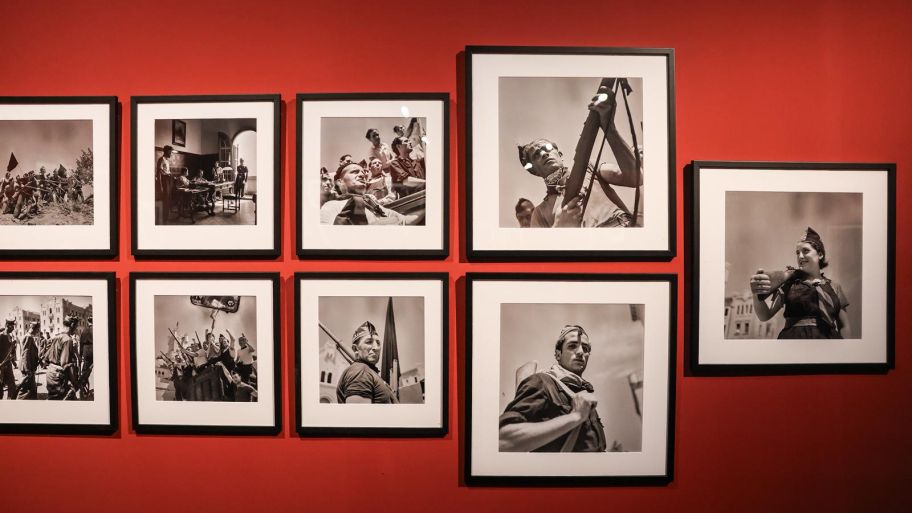
Unpublished photographs of the Spanish Civil War, hidden for more than seventy years, come to light with the exhibition La Capsa Vermella d’Antoni Campañà. Fotos de guerra, art i Sant Cugat, which offers a journey through the legacy of one of the most relevant Catalan photographers of the 20th century and who lived a large part of his life in Sant Cugat. The exhibition allows to see images of great impact and documentary value, as well as Campañà's artistic and local side, and can be visited at the Sant Cugat Museum until September 13.
The exhibition is divided into three blocks:
- La capsa vermella, with photographs of the Civil War in Barcelona found in 2018 in the garage of Campañà's house in Sant Cugat, includes images as iconic as the CNT-FAI militiaman in front of the House of Umbrellas in 1936 and other unpublished snapshots. This section also proposes reflections on the manipulation of images and the construction of the historical narrative.
- L’avantguarda del pictorialisme shows the most artistic side of the photographer with bromoil prints from the thirties, which claim photography as a work of art.
- Un fotògraf de Sant Cugat gathers family photographs, snapshots of the town and reports from the period 1925-1970, which provide valuable testimony about daily life during the Civil War and Francoism.
A project of great historic and artistic value
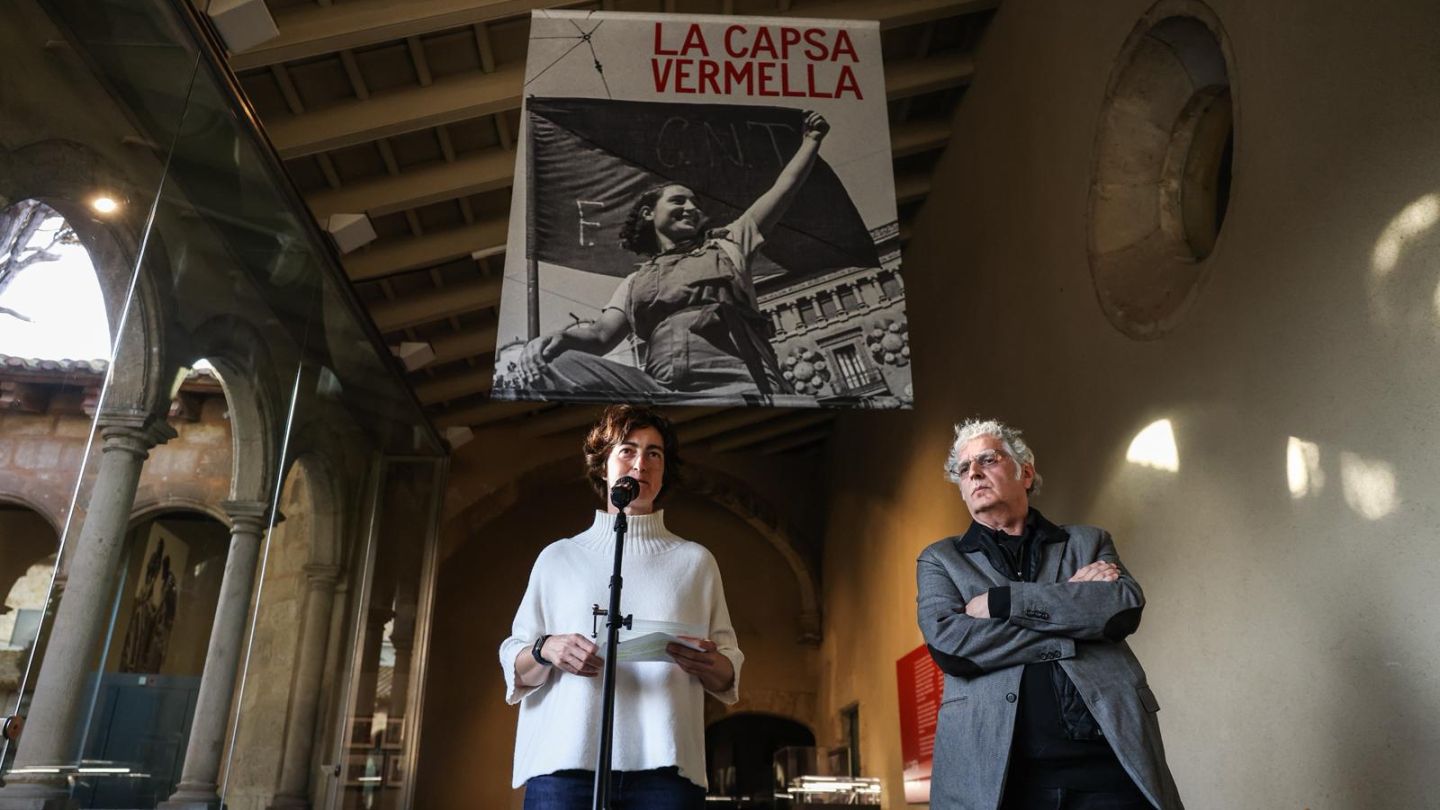
The Councillor for Culture, Núria Escamilla (Junts), highlighted during the inauguration that it is a project of great historical and artistic value: “Today is an important day for the city because we are inaugurating an exhibition of great historical, artistic, and documentary value. This exhibition not only connects us with the historical memory of the country and with striking images of the Civil War, but also brings us closer to Campañà the artist and his relationship with Sant Cugat.” Escamilla recalled that the project began thanks to the impetus of the previous Councillor for Culture and current head of Historical Memory, Esther Madrona (ERC), and highlighted the collaboration of the Campañà family and the dedication of the Museum team.
The photographer's grandson, Toni Monné Campañà, has explained that the exhibition is the result of years of research and dissemination work: “From this exhibition derive many activities that are programmed, that are specified in the leaflet, and we await you to enjoy first today and then all the other events related to the exhibition.” Monné has highlighted the joint work of the Museum and external collaborators: “All this has been possible thanks to the dedication of the Museum's team, with a spectacular setup, with three exhibitions, videos, display cases and reproductions of my grandfather's artistic lumps. I want people to realize that we are talking about a photographer who in the 30s incorporated the European avant-garde gaze within the post-pictorialist movement.”
A casual discovery that changed the history of the archive
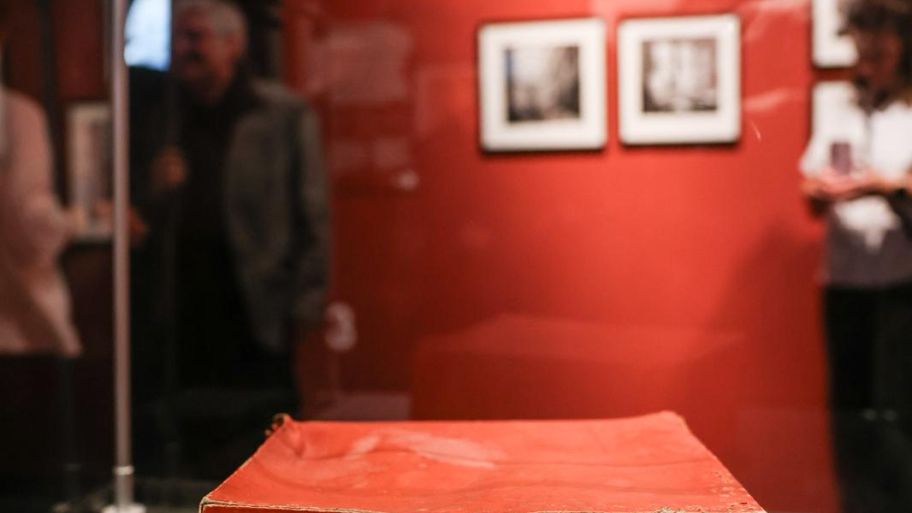
The discovery of the red box was casual: the Campañà family found thousands of photographs stored in red boxes in the garage of the photographer's house, which was about to be demolished. This material had been kept secret for decades and had never been shown. From here, Campañà's grandson, Toni Monné Campañà, together with the journalist Plàcid Garcia-Planas and the history professor Arnau Gonzàlez i Vilalta, have promoted various dissemination projects, including books, documentaries and international exhibitions.
Among the initiatives for disseminating Campañà's legacy, the exhibition La guerra infinita stands out, presented at the National Art Museum of Catalonia in 2021, which showed the original small-format photographs found in Sant Cugat. Subsequently, the photographic center Pavillon Populaire of Montpellier (France) dedicated to this archive the exhibition Icônes cachées, with modern large-format copies. The inauguration, in June 2021, had a great media impact and became the first exhibition in the center's history extended three months longer than planned due to public success.
Antoni Campañà Bandranas combined photojournalism with artistic photography. During the thirties he stood out with his post-pictorialist bromoil prints and documented the conflict in Barcelona. Subsequently he worked in sports photography and color tourist postcards. In 1937 he moved to Sant Cugat fleeing the bombings, where he lived until his death in the eighties.
Programming
During the period in which the exhibition will be at the Museu de Sant Cugat, a series of complementary activities will be offered:
- Thursday, April 9 at 7 p.m.: Conference: Antoni Campañà: La Capsa Vermella torna a Sant Cugat (By Toni Monné Campañà, exhibition curator and grandson of the photographer)
- Thursday, May 14 at 7 p.m.: Commented visit by the co-curators of the exhibition La Capsa Vermella (By Plàcid Garcia-Planas, journalist, and Arnau Gonzàlez i Vilalta, historian)
- Saturday, May 16 at 12 p.m.: Theatrical visit: El Sant Cugat d'Antoni Campañà. Un Sant Cugat desaparegut (By Roger Casadellà, actor)
- Thursday, May 21 at 7 p.m.: Conference: La capsa de fusta. Els primers trets de Francesc Boix (By Ricard Marco, photographer)
- Thursday, June 11 at 7 p.m.: Conference: El Sant Cugat de Antoni Campañà: fotografies entre el record i la història (By José Fernando Mota and Jordi Casas, historians)
- Tuesday, June 16 at 7 p.m.: Debate: Qui pot fotografiar la guerra avui? Censura, control i intel·ligència artificial (By Anna Surinyach and Ricard Garcia Vilanova, photographers – 5W. Moderated by: Bernat Millet – Lumínic Festival)
- Thursday, June 25 at 7 p.m.: El bromoli transportat: art i tècnica en la fotografia (By Dr. Raquel Freixas Jambert, lecturer at the University of Barcelona)
- Guided tours of the exhibition:
- Saturdays April 25, May 20, July 18, August 22, and September 12 at 11 a.m.
- Saturday, May 16 (Museums' Night) at 8 p.m.


