
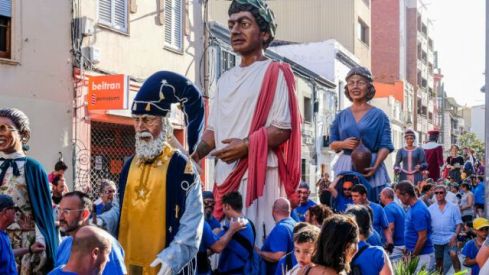
The Cornellà Castle hosts until July 26 the exhibition 30 anys Concurs de Fotografia Jordiada Memorial Bernardí Fornals, a show that presents a selection of the awarded images in its more than thirty editions and celebrates the trajectory of this emblematic local contest.
The exhibition highlights a photographic archive formed over recent years by hundreds of images that document the vitality of the associative fabric of this city in Baix Llobregat and the strength that Catalan culture has in the municipality. These are snapshots that show elements such as giants, dances, castellers, devils, play spaces, music, entities and the traditional book and rose stalls, as well as all the moments surrounding the celebration of the Jordiada.
A tribute to popular Catalan culture
Beyond a photographic collection, the exhibition is a testament to the social and cultural evolution of the city, a collective portrait that recognizes the role of this contest as a space for promoting photographic talent and that remembers all the people who have contributed to its growth over the years.
At the same time, the exhibition portrays a festival that is celebrated every year in Cornellà around Sant Jordi. The Jordiada, which this year reached its 33rd edition, had as its main stage the Can Mercader Park, with about thirty entities, especially linked to popular Catalan culture, which offered performances, stands and parades. In addition, the festival continues to grow and this year the Plaça de l'Església also hosted activities such as a habanera singing and a parade with groups of devils and dragons from the city.
The exhibition can be visited from Monday to Friday, from 10 a.m. to 2 p.m. and from 5 p.m. to 8 p.m., and on Sundays and holidays, from 10 a.m. to 2 p.m.
An emblematic space in Cornellà
The exhibition can be visited at Cornellà Castle, one of the most representative buildings in the city. This large Gothic manor, built and renovated in different eras, is located at the top of a small hill from where it dominates the Centre neighborhood and offers a privileged view of the final stretch of the Llobregat river.
Since 2000, after being acquired and renovated by the Cornellà City Council, the castle houses various municipal services linked to cultural heritage, an exhibition hall, the Municipal Historical Archive and spaces for cultural and citizen activities.
All the programming here.


