Despite the diversity of proposals, the will to look at the world with more attention, commitment, and critical awareness is present in all these exhibitions. Bodies and matter that transform, landscapes that refer to the indeterminacy of reality or the dissolution of human figures, everyday objects loaded with history or materials that bear inscribed colonial violence. We present them to you below.
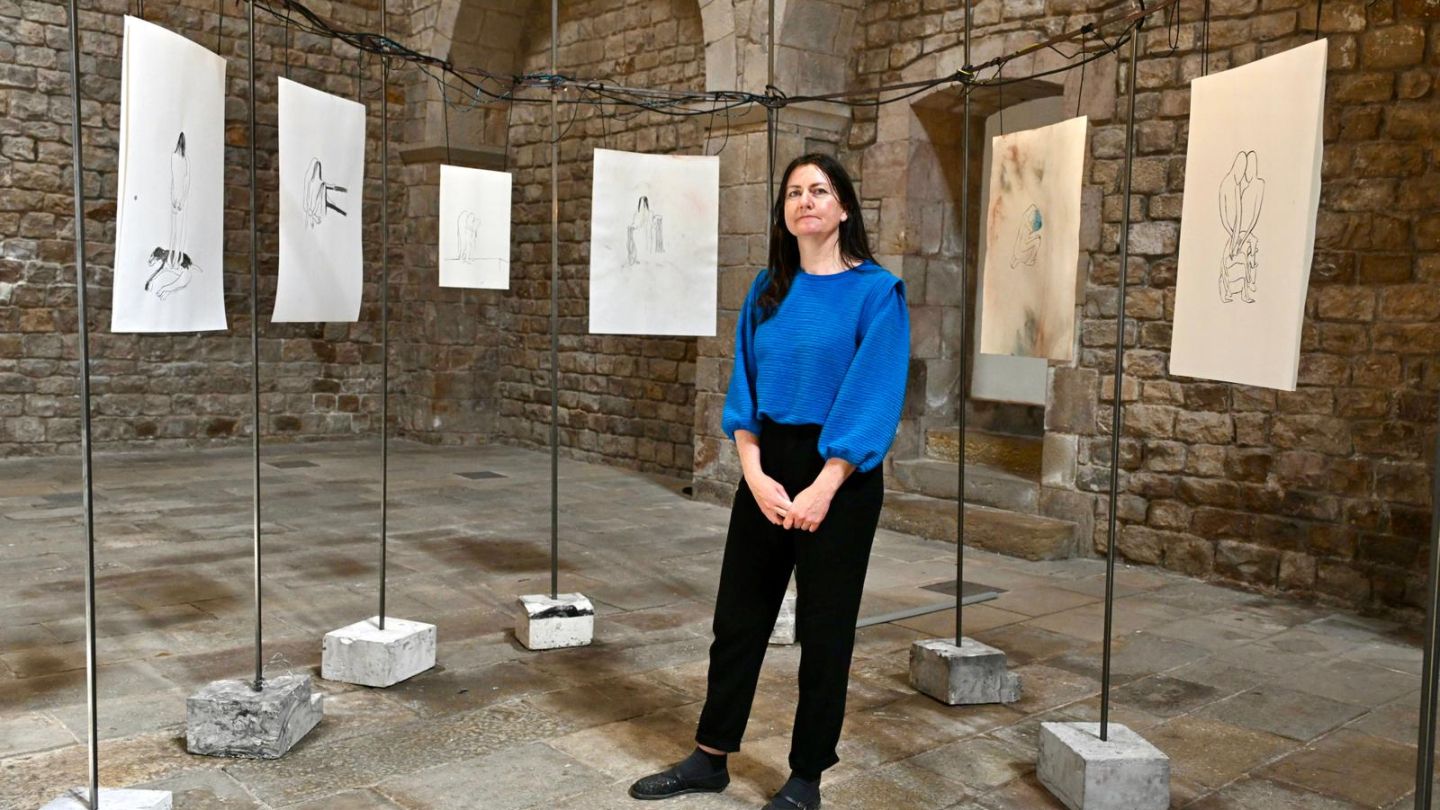
Firstly, the La Capella Art Center hosts until July 5 two exhibitions that, despite being independent, dialogue around the fragility of bodies and the ephemerality of matter. In Espai Capella, Irish artist Sinéad Spelman presents Torba, an exhibition of light-traced drawings that questions the artificial separation between body and nature, individual and world, taking peat, a traditional organic material in Ireland, as a reference. In Espai Rampa, sculptor Mikel Adán Tolosa exhibits Because I like to live here, an exploration of the coexistence between stone and butter as opposing materialities. To maintain the butter sculptures, the artist opted for refrigerated pedestals instead of closed refrigerators, thus preserving the visibility of the ephemeral condition of the organic. Some pieces are also exhibited in local shops in the neighborhood, adding a gesture of delocalization to the proposal. A program that reaffirms La Capella as a space for supporting emerging creation.
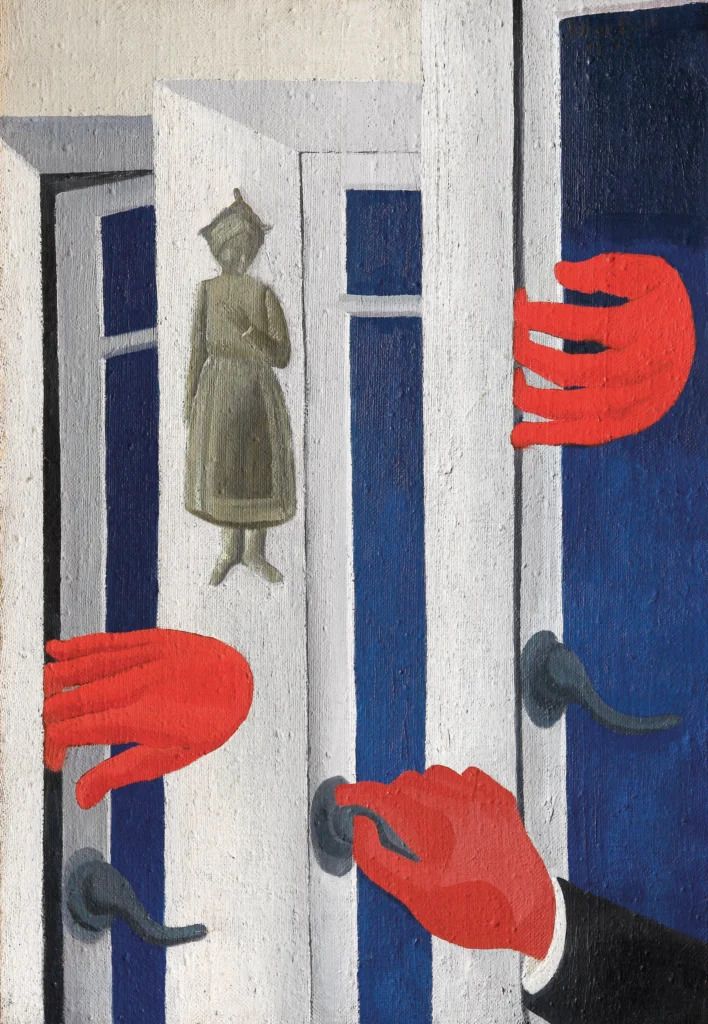
The Vila Casas Foundation, for its part, hosts until July 12, 2026, A World in Struggle, the first major retrospective in Catalonia of Esther Boix since 2007. Curated by Bernat Puigdollers, the exhibition chronologically traces the career of an artist marked by political commitment, feminism, and pedagogy. From her first works on the misery of the post-war period, through the turning point of her trip to Milan in 1957, her anti-Franco militancy after the Caputxinada of 1966 and the co-founding of the L'ARC school, to her mature landscapes in La Garrotxa, the exhibition portrays a figure who made painting an instrument of denunciation and political commitment. Located in Espais VolART, the exhibition intertwines pictorial work, documents, and pedagogical pieces to offer a complete vision of an artist who questioned the political and social canons of her time through a deeply personal visual language.
Among the exhibitions that can be visited until September, the Fabra i Coats Contemporary Art Center hosts Atentament, the solo exhibition by Venezuelan artist Patricia Esquivias, curated by Caniche Editorial. The exhibition invites visitors to observe the everyday environment with an attentive and meticulous gaze, revealing the historical and symbolic load of seemingly ordinary elements: the facade of a kebab shop, urban furniture bollards, or a popular embroidery from a village in Toledo are some examples. Throughout the two floors, Esquivias intertwines research, sculpture, installation, and correspondence to construct narratives that connect the local with global history. A common thread of the exhibition is the dialogue with the work of sculptor Alberto Sánchez, an artist of the Spanish avant-garde exiled in the Soviet Union, which takes the artist to Morocco. The exhibition reflects on the homogenization of cities, collective memory, and the invisibilization of rural and artisanal work.
CaixaForum Barcelona hosts Desenfocat until September 27, a thematic exhibition that traces a narrative about blur in art from the 19th century to the present day. Born from the collaboration between "La Caixa" Foundation, the Musée d'Orsay, and the Musée de l'Orangerie, the exhibition brings together 77 works by 58 artists in various formats and techniques. Curated by Emilia Philippot and Claire Bernardi, it starts from Monet's Water Lilies to reconceptualize blur as an intentional aesthetic choice and not as a visual limitation. Structured into five thematic areas, the exhibition puts works by Turner, Rothko, Hiroshi Sugimoto, Alfredo Jaar, or Nan Goldin in dialogue to explore how indeterminacy and indefiniteness serve to question certainties, represent what is difficult to show, and reflect on identity and the uncertainty of the human condition. A journey that invites the viewer to abandon the search for sharpness and accept the indefiniteness of reality.
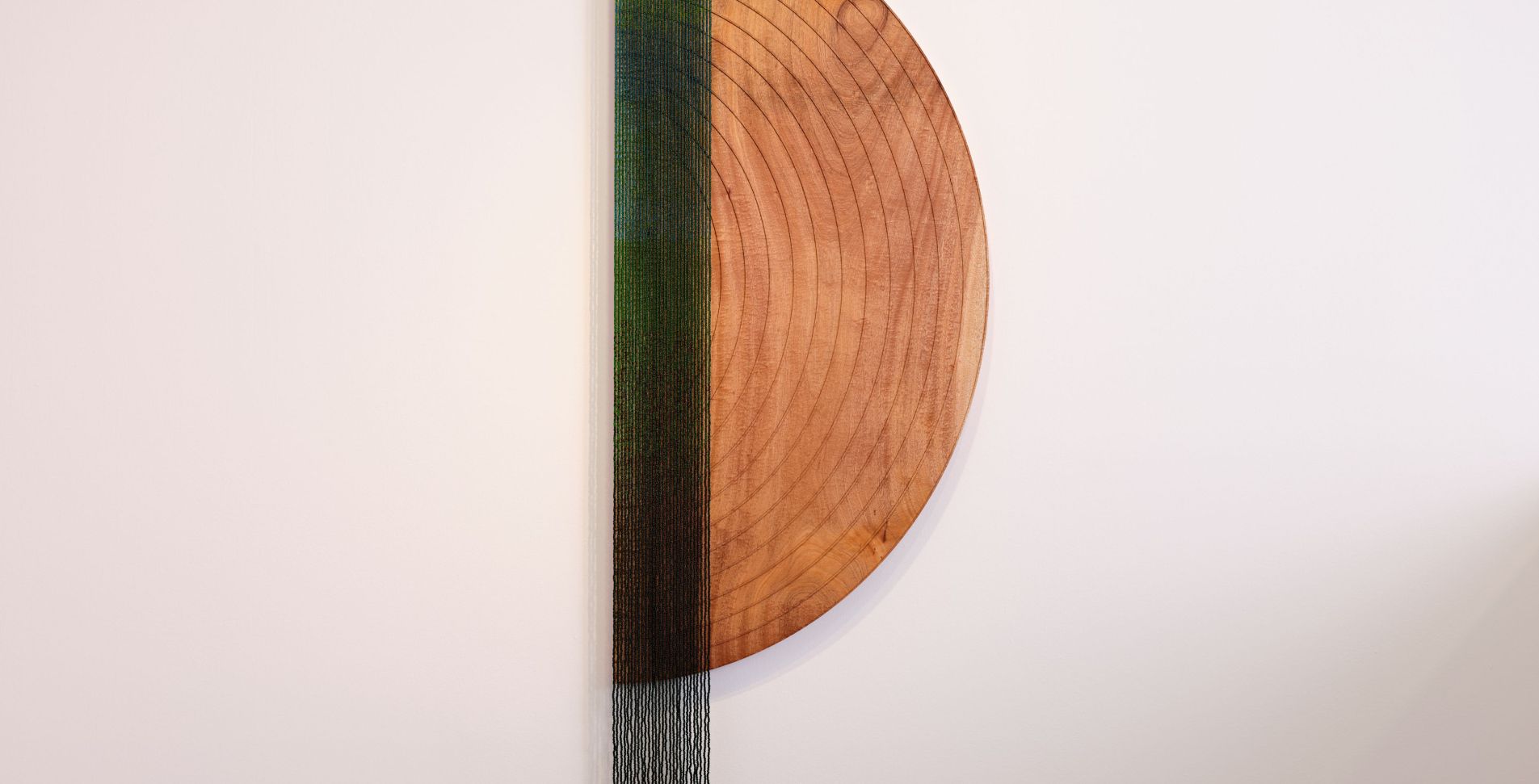
And finally, until September 13, the Fundació Joan Miró presents Changing States, the solo exhibition by Kapwani Kiwanga, the French-Canadian artist who won the ninth edition of the Joan Miró Prize. This exhibition is the result of a year of work with newly produced pieces. Trained in anthropology, Kiwanga investigates the relationships between power, territory, and body through installations and sculptures that transform complex historical processes into abstract and poetic forms. The materials she works with (sisal, clay, fabrics, stone, glass, shade nets) are chosen for their role in colonial, extractive, or migratory circuits, turning the works into devices for critical reflection. The title refers to the artist's conviction that even the most solid materials are in constant fluctuation. The exhibition establishes a natural dialogue with Miró's legacy, evoking his poetry of color and his abstraction rooted in reality, while updating it from a contemporary perspective on violence and ecological guilt.


