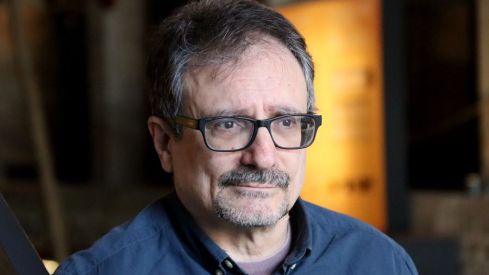
The author of Victus (La Campana, 2012) returns with an adventure novel that takes up Melville's classic where the American author put the final period. After the attack of the white whale, Ismael, the protagonist of the work, is rescued by a ship condemned to disaster. After the shipwreck (Univers, 2026) is an adventure story, which can also be read as a political fable. "It is a novel of the 21st century, that holds the reminiscences of the 19th," says Albert Sánchez Piñol.
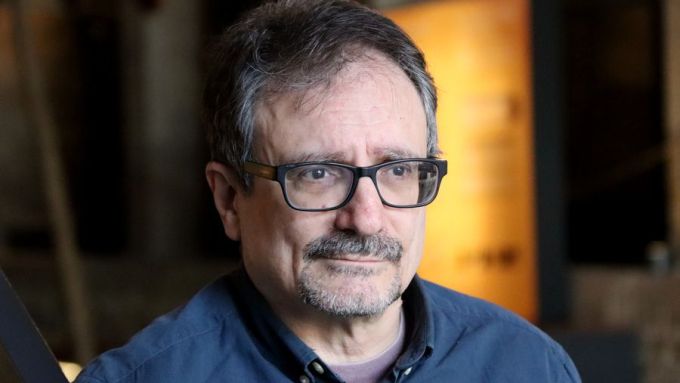
“My name is Ismael, and I believe I only survived because someone had to tell this story,” thus begins Sánchez Piñol’s new work. Ismael Coficofin survives the sinking of the ship Pequod and is rescued by the Lònia, a vessel led by a reckless captain. On the new ship, the crew is possessed by an idea that overflows the limits of authority and leads the ship to a tragic destiny. What they had not calculated was the unrestrained nature and the strength of the white monster.
According to the writer and anthropologist, the book tells us about the characters' relationships with nature and "how they face an insurmountable obstacle." The author argues that the book offers various interpretations. On the one hand, it is a classic adventure novel, but it also has a political reading. Sánchez Piñol cites as a reference a classic like Gulliver's Travels, which is both an adventure book and a political satire. On the other hand, it admits a more relaxed reading for fourteen-year-olds.
This novel addresses in the form of a parable the power struggles that led the independence process to defeat. The book's editors observe that if Victus, published in 2012, literarily opened the Procés, After the shipwreck narrates its outcome. Sánchez Piñol considers that often “fiction is the best way to explain the truth”. The author is aware that the book might bother many people, but he has not been able to avoid being critical of the current political situation. “Literature is not for cowards”, Sánchez Piñol emphatically states.
The novel begins in medias res but maintains the classic narrative structure of the three acts. Sánchez Piñol recovers the three protagonists of Moby Dick. The relationship between Ismael and Captain Ahab strengthens, also with the monster, more than in the original classic. Sànchez Piñol constructs an oral narrative in which he incorporates new fantastic characters, but which "has more human elements". The writer configures a political evil situated on the margins. "Evil exists somewhere and attacks us," he confesses.
“When they tell me I write books like the old ones, I answer them that I write books like those of always”, declares the author, who regrets that the characters of the original work did not kill the monster. Unlike Moby Dick, in After the shipwreck a female character is incorporated and the author entertains himself with more accurate descriptions of the monster. Secondary characters from the classic are also recovered, like the cook.
Before the challenges of AI
Sánchez Piñol reflects on the advance of artificial intelligence and how it can affect writers. The author believes that “mass literature will end up being made by machines”. Its learning capacity is extremely fast. "Right now, the difference between an author and a reader who writes is that the characters of the latter stop at a red light. That's what AI does. But one day someone will come, will remove the censorship of political correctness, and we will have four days left. It's that sad", he declares.
After the shipwreck, it is illustrated with works by the audiovisual artist Franc Aleu, who has used artificial intelligence tools. The anthropologist argues that AI is a tool like any other, but also warns of the probability that robots will end humanity. "If with AI there is a 1% chance that humanity will be destroyed, stop it. One percent is a lot. But it won't stop, we prefer to make a profit," he states.


