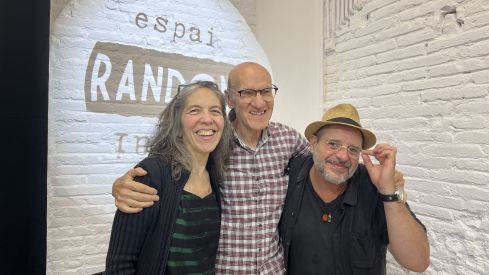
Actress Maria Clausó and actor Roger Pera star in Berta i Marià, a comedy written by Ever Blanchet that can be seen at Espai Ràndom every Thursday until July 2. The proposal, defined by the performers as a "fun and spicy" play, explores the evolution of a couple over four decades, between separations, reunions, and moments of coexistence.
The play follows the story of Berta and Marià from their 50s to their 90s, showing how the passage of time transforms their relationship and their way of facing life. According to the author, Ever Blanchet, the production addresses "the difficulty of coexistence between couples" but also "the joy or wonder of being paired."
To convey this life journey, the performers have especially worked on the gestures and movements of the characters. Roger Pera highlights that the interpretive challenge is considerable: "We start at 50 and end at 96. It's a very intricate work because the scenes advance in temporal leaps and we continue to be the same characters."
The piece also reflects on the different ways of facing aging. Maria Clausó points out that Berta's character represents common concerns of many women, such as the fear of ceasing to be attractive or the need to seek support from other women when feeling abandoned. Pera, for his part, notes that the play brings to the table some gender stereotypes related to age and power relations within the couple.
Beyond the big themes, Berta i Marià portrays everyday situations with which the audience can feel identified. "The play is about people who love each other," explains Pera. "Loving is not always passion; it is also sharing life and taking care of each other in the small gestures of every day," he adds.
The scenic space contributes to reinforcing this proximity. Clausó highlights that the configuration of Espai Ràndom creates the sensation of observing the intimacy of a couple from very close, as if the spectators became privileged witnesses of their conversations and discussions.
The creators trust that the function offers the public an emotional journey and awakens reflections on their own relationships. "It's a proposal for people to be able to look at themselves and compare themselves with the characters," says Blanchet. According to Pera, this identification is especially evident among couples who attend the performance, who often leave the theater commenting on the situations they have seen reflected on stage.


