
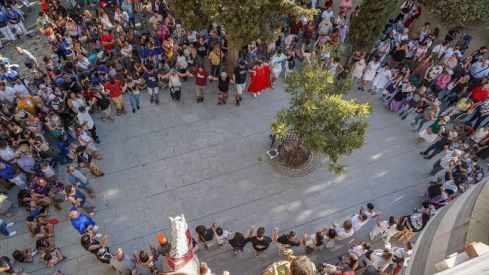
In Esplugues de Llobregat, the day of Santa Magdalena was, for centuries, the official main festival of the municipality. However, as soon as the Festa Major de Sant Mateu appeared, the calendar gradually displaced it until it became almost invisible.
If on any September 21st, Saint Matthew's Day, rain visits Esplugues, some still explain it with an old smile: the legend says that, since that calendar change, there is no year that rain does not make an appearance, even if only for a few moments. It is, say those most faithful to tradition, the saint's way of remembering that, for centuries, that had been her feast. As if the sky, stubborn, remembered a change that did not quite fit.
A saint among caves and ancient words
The history of Santa Magdalena is rooted in a symbolic geography. Tradition explains that she lived thirty years in a cave in the south of France, and this subterranean image finds a direct echo in the very name of Esplugues, which comes from the Greek spelugges, "caves".
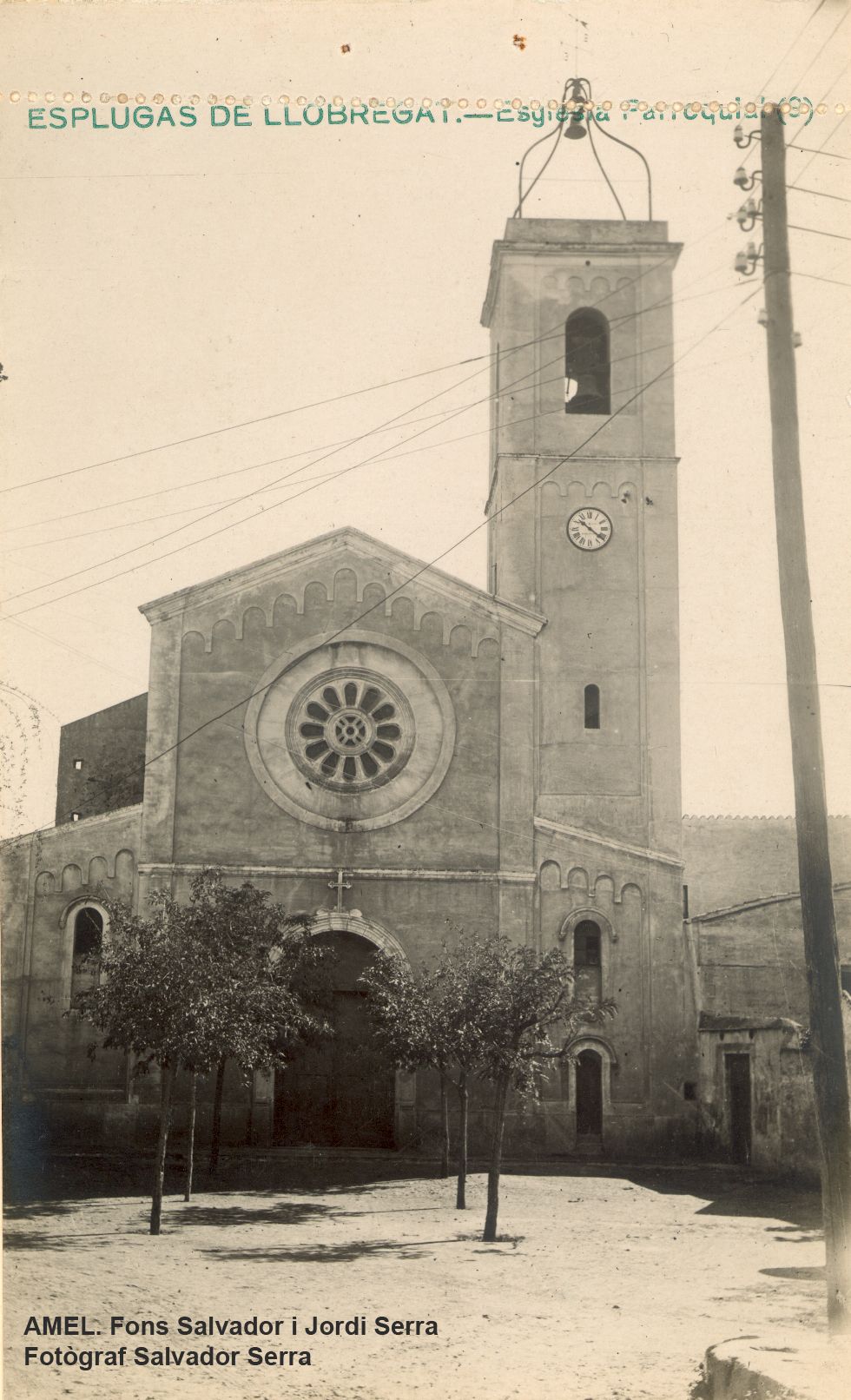
Already in the 10th century, the hermitage that occupied the site of the current parish church was dedicated to the saint. That foundational gesture, dedicating a sacred space to a figure of contemplation and silence, would eventually become the starting point of an annual celebration set for July 22nd. Over time, the festival grew: from the religious service to the collective gathering, from the ritual to the square.
When the calendar bifurcates
However, like an only child who enjoys the full attention of her parents, the moment Santa Magdalena most feared arrived: the arrival of Sant Mateu, co-patron and younger brother, opened a second festive period.
For many years, both celebrations coexisted with their own personality. The day of Santa Magdalena continued to concentrate most of the events and maintained the weight of tradition, while Sant Mateu occupied a more discreet space. The prominence of Santa Magdalena was not determined only by all the years of history that accompanied it, but also because September coincided with the harvest season, an intense period of work that made popular participation difficult.
From the 1970s onwards, however, the situation gradually reversed. Sant Mateu assumed the role of official Main Festival and Santa Magdalena was relegated to a secondary role. What had been the town's great celebration for generations saw its prominence slowly fade, to the point that many feared it would eventually disappear from collective memory.
The return of the ancient voice
But traditions, when deeply rooted, often find a way to be reborn. With the democratic recovery and the cultural effervescence of the 1980s, Esplugues began a process of rediscovering its own forms of celebration. Entities, collectives, and popular culture spaces began to recover dances, imagine new rituals, and reconnect with elements that had been suspended.
From that impulse, the giants, the stick dancers, and the recovery of the Ball del Babau were born, a dance documented in the Costumari Català by Joan Amades and linked to the ancient celebrations of Santa Magdalena. The key date, however, was July 23, 1989, when this dance was publicly presented. That event is considered the starting point for the modern restoration of the Santa Magdalena Main Festival. Over the years, the celebration incorporated new elements such as the Ball del Ginjoler, the participation of the Castellers d’Esplugues, the devils, the Ball Parlat, and the satirical verses.
A festival that is reconstructed every year
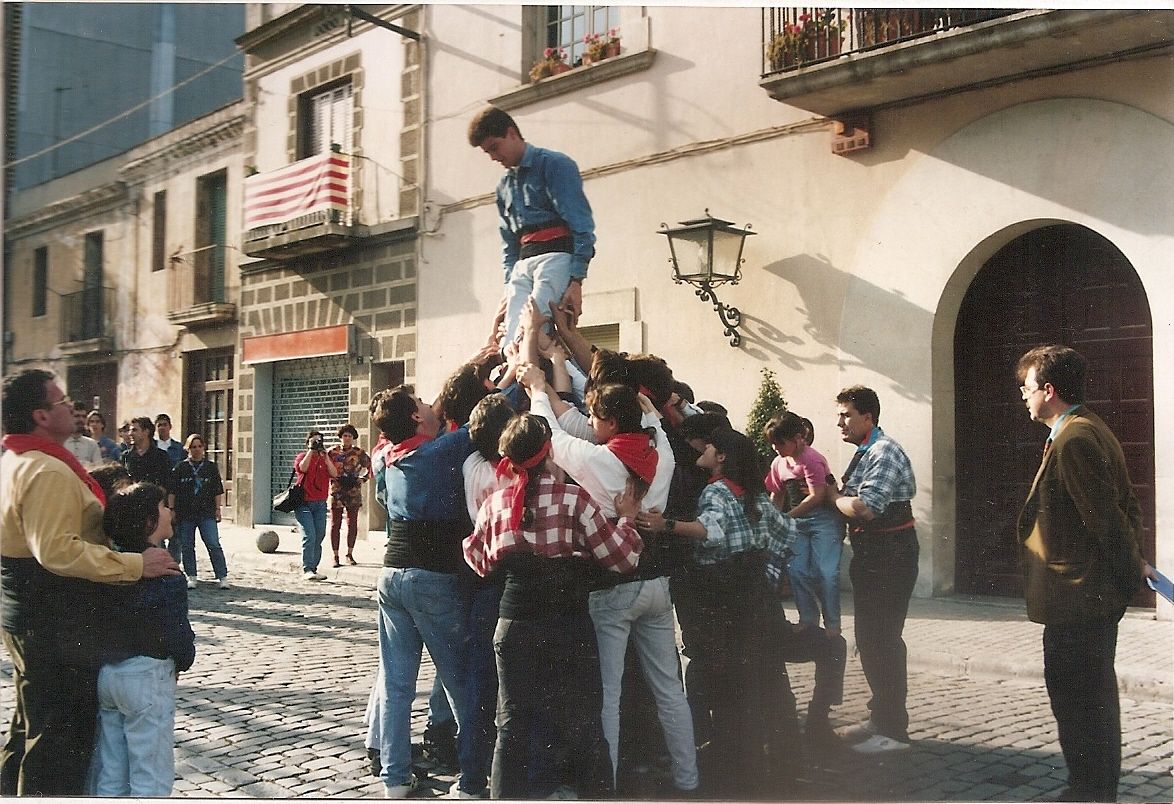
Today, the celebration maintains its core around July 22 and extends to the nearest weekend. Among the most unique episodes is the Processó del Ferro, born in 2011, which transforms the street into a collective choreography of fire, music, and movement. Its finale, with the walking pillar of the Castellers d’Esplugues, has become an almost iconic image: effort, balance, and vertigo over a known territory.
The festival continues to expand its imaginary with new figures such as the fire beast Guita Trapella, or the giant figures Quimet and Mateuet, two smaller-scale versions of the city's giants.
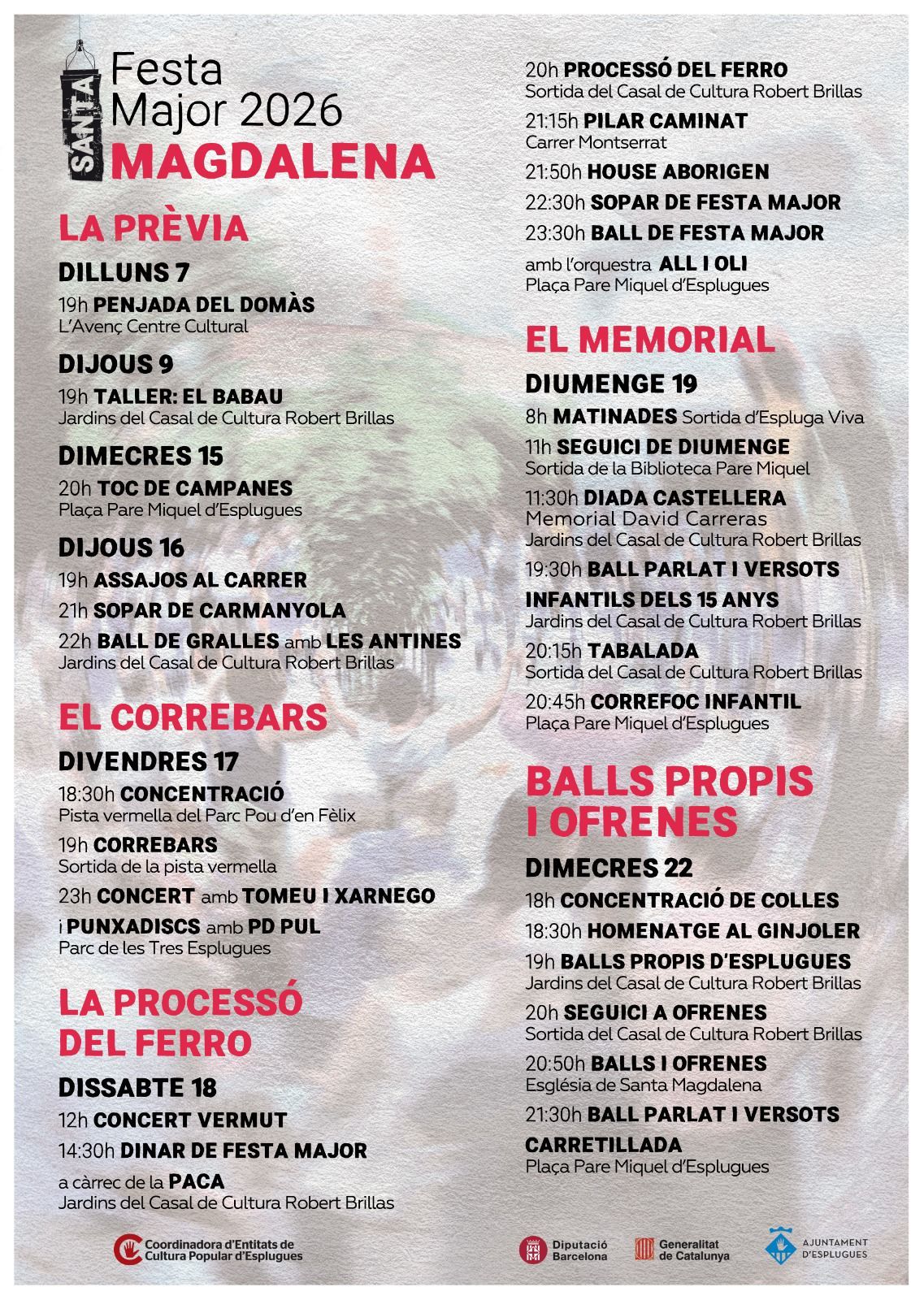
For this year's edition, the weekend chosen to concentrate the most emblematic activities of the celebration is July 17, 18 and 19. However, every party needs a good warm-up! That's why between next Monday, July 7, and Thursday, July 16, there will also be activities to warm up, among which a workshop to learn the Babau dance and the potluck dinner, called for the night before the start of the party, stand out.
From Friday 17, now yes, the party enters full swing with the Correbars, the Iron Procession and its walking pillar, the main festival dance, the human towers day, the children's fire run and the entourage, among other activities.
The festival culminates on Wednesday 22 with the central acts dedicated to tradition: the homage to the Ginjoler, the town's own dances, the offerings at the church and the spoken dance, in a closing that reaffirms the vitality of Esplugues' co-official Main Festival.
More than three decades after its rediscovery, Santa Magdalena is no longer just a recovered festival: it is a form of cultural continuity. A way of demonstrating that traditions are not fixed pieces, but organisms that breathe with each generation.
Today, Esplugues knows it as its "small Main Festival", but one thing is clear: it is not small at all.


