
A flock of teenagers and teachers invade the entrance of the CCCB. They are about to open a box of memories of their youth. Perhaps the older ones connect with We are seventeen years old from a more distant perspective in time, but more nostalgic. The younger ones, on the other hand, can consider the fact of not burning stages and enjoying the concerns that arise in adolescence.
We are seventeen is a collective portrait of young people from Catalonia, Lithuania and Romania who explore their identity and way of understanding the world through photography, cinema and the word. Àxel Vicente and Paula Quimbayo, two participants of the exhibition, present a taste of what the exhibition will be. On both sides, they encounter an adult world formed by Judit Carrera, director of the CCCB, Susana Arias, head of mediation at the CCCB, and Agnès Sebastià, member of the cultural association A Bao A Qu and co-curator. Before them, they experience media pressure far from trolls and hate speech on social networks.
“The exhibition does not show an adult vision. Our vision, our group, us showing what we are, is exhibited,” declares Àxel Vicente before the media and the CCCB authorities. In this sense, Àxel thanks the trust that the professionals of the cultural center give them to express themselves freely and highlights the importance of the exhibition as a collective portrait. “Despite being a project for young people 17 years old, it remains in everyone's memory,” affirms Àxel. For her part, Paula Quimbayo values the transformative power of art. “After the exhibition, we are more attentive to our surroundings. We appreciate more subtle details like the incidence of light on a face. We feel each area of art differently,” declares Paula.
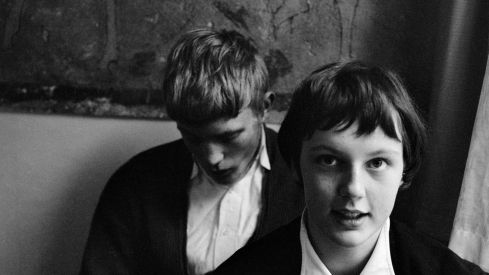
The exhibition is inspired by the portraits that the Dutch filmmaker Johan van der Keuken made of his group of friends when he was 17 years old, in 1955, in the book Wij zijn 17 (We are 17 years old). The author's thirty photographs are exhibited for the first time in Barcelona. Seventy years later, this European project invites various groups of students from Catalan high schools to take photographs, make films and write texts, with the accompaniment of photographers, plastic artists, filmmakers and playwrights.
A journey through the intensity, the strength and the fragility of youth
“Think of the exhibition as an emotional journey,” declares one of the young women leading the tour. The exhibition features four artistic installations. In the first room, they invite us to trust a succession of voiceless faces. We delve, then, into the minds of adolescents and listen to a battery of intimate thoughts that are verbalized. We feel their worries, uncertainties, reflections that resonate and endure in the mind.
At this point in the exhibition, we begin to form an idea of a teenager. We think of our past self based on the current Generation Z. If we follow the itinerary, we observe photographs of spaces that we inhabit during youth. We witness messy rooms with all kinds of objects that represent our personality and hobbies. In this room, we also explore memories through objects. The most insignificant possessions can fill you with the most extreme existential crises.
In each room, it is perceived how young people seek ways to show themselves beyond the predominant codes. The first times or the fears for an uncertain future are felt. Furthermore, the exhibition features the photographs from the book Wij Zijn 17 (1955) by Johan van der Keuken, some portraits in which the author flees from sophistication and opts for naturalness and proximity. The work of the Dutch filmmaker emanates everyday life and humanity, without falling into a moral judgment. For example, in the documentary Blind kind, van der Keuken films blind people in a genuine way.
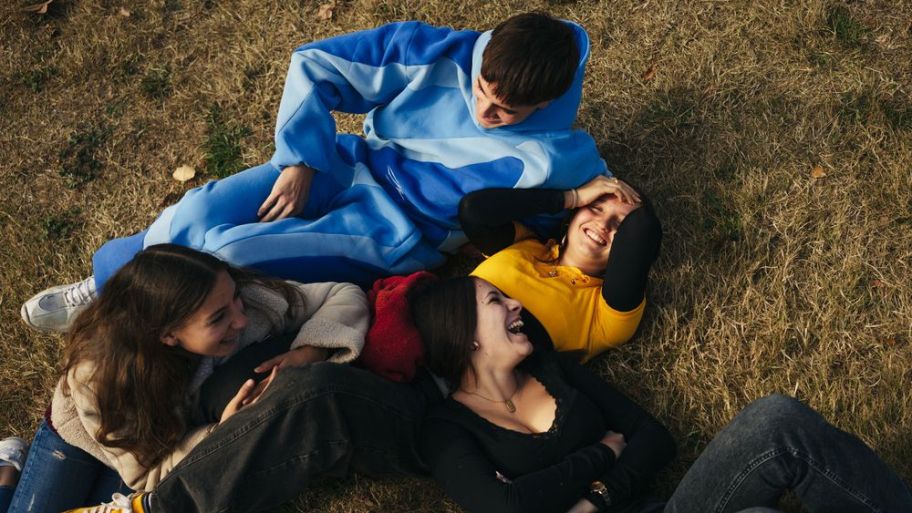
Before reaching the end of the route, a film is projected that invites us to contemplate the routine of various young people or the moments they spend in community. Both in van der Keuken's works and throughout the exhibition, the young people convey to us the desire to be recognized as unique and, at the same time, the need to belong to a group. At the end of the path, visitors can express their fears on a mural, while the rays of a disco ball dazzle their sight. "The night gives us intimacy," states one of the young speakers. We are seventeen years old has come to an end.
“We didn't want to look like the typical English workbook photo. Here you can see how they are, without filters,” Àlex states to the media. At the exit of the exhibition, a group of young people are heard grumbling about the lack of sleep. “Buah, I think I'll take a nap and then go out,” declares one of the members. The nerves of the presentation are now behind them, now are moments of revelry and to celebrate that they are seventeen years old.
Parallel Activities at the Filmoteca
The exhibition can be seen at the CCCB from March 6 to May 17 for free. The exhibition is also curated by researcher and doctor in humanities Érika Goyarrola. In parallel to the exhibition, the Filmoteca de Catalunya has programmed, from March 4 to April 30, a retrospective cycle dedicated to Johan van der Keuken. Screenings will be held over almost two months that explore his cinematographic and documentary work.


