Lovers of analog sound and DJ sets have a cultural corner in Barcelona's Poble-sec neighborhood. We peek in on a Friday.
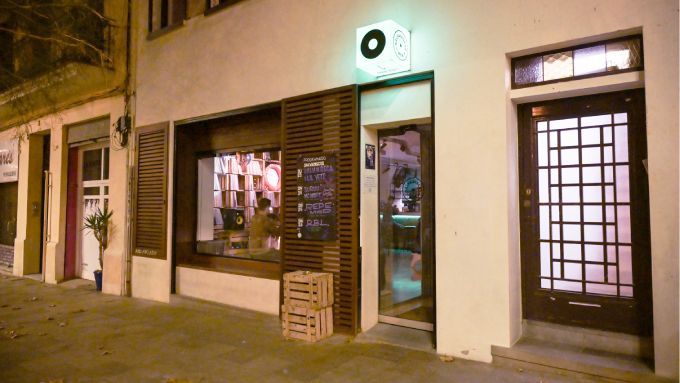
It's a quarter to nine on a Friday night, and the weekend is palpable in Plaça de Santa Madrona in Poble-sec. A group of young people are awkwardly sitting on a bench, talking and cracking open cans with their hands. I wonder if they're also here to check out Salvadiscos, this temple of vinyl records. They don't go in, they head down the street. Another day, perhaps.
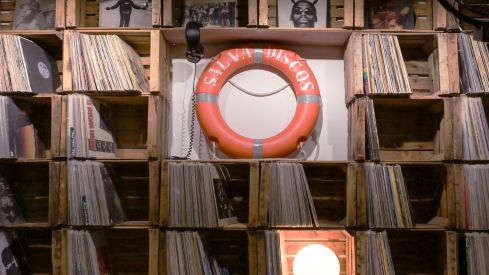
At first glance, this cultural association is surprising for its musical fishbowl appearance. From the outside, enormous wooden shelves holding over 8,000 vinyl records can be seen. Initially, the idea might evoke a certain Diogenes syndrome, but far from it, Salvadiscos is the sanctuary of a group of cultural explorers who buy and sell new and used vinyl and offer DJ sets with analog sound.
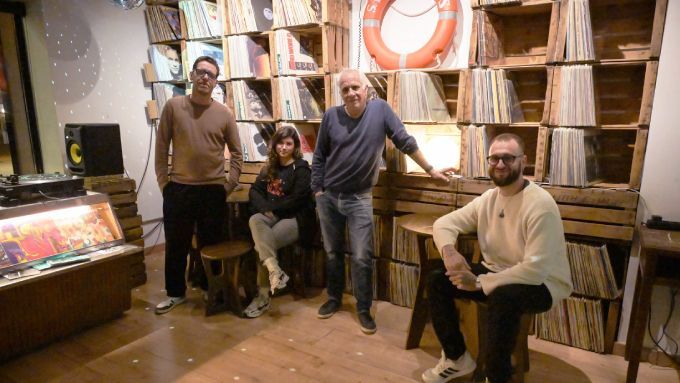
The good vibes start as soon as you walk in. Today there are three partners: David Ayllón, Salva Torras, and Valentina Montone, music lovers through and through. They immediately show off their arsenal. Ayllón walks around the small venue and rattles off titles and musicians from all eras. "Sala Razzmatazz is called what it is thanks to this vinyl," he explains, delicately taking Jazzmatazz by the American rapper Guru from a shelf.
Salva rummages through vinyl records in another part of the room where there are dozens: soul, blues, hip-hop, House… They have it all. He explains that most of the records have gone under the knife, as they were damaged, and when they arrive at Salvadiscos, they undergo a "high-risk operation." They repair them, clean them, and change the cover. In short, they save them.
But the cherry on top of this association's cake are the vinyl DJ sessions they offer from Wednesday to Sunday with a wide variety of styles, although they confess that black music is what best represents them. Furthermore, the activity doesn't stay within these four walls. They also hold open workshops for people to learn how to DJ. "We are very connected to the neighborhood and we want everyone to be able to come," says Valentina Montone
This whole commotion began ten years ago with Torras himself and a former partner, Jordi Ribé, both involved in the music scene, when they bought 600 records from a closing nightclub and label. The legacy of that beginning is still palpable. "They loaded them into these fruit crates and sold them at markets," says David Ayllón, touching one of the crates that, instead of peaches, now holds vinyl records. Years later, they opened a small shop in this very location, which, during the pandemic, became "a meeting point for DJs, music lovers, and those who wanted to learn to spin records." That breeding ground led to the creation of Salvadiscos in July 2021. More than four years have passed, and they now have over 11,000 members who pay an annual fee of eleven euros. However, access to the shop during the day is free.
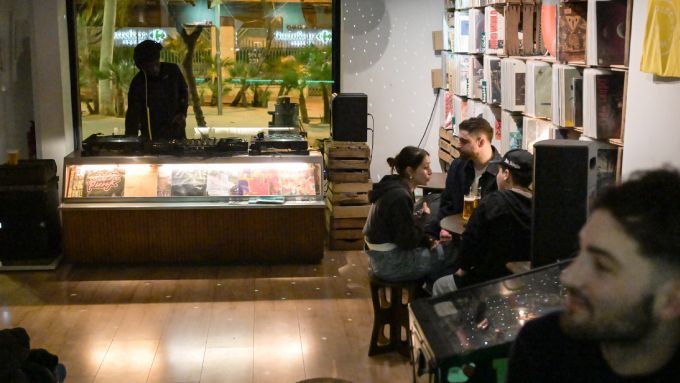
It's already a quarter to eleven and the venue is filling up. People are leaning against the bar, presided over by bartender Lucan Vieira, who juggles with the mixes. At the other end of the room, DJ Suru, a resident of Salvadiscos, begins to spin records with all the wisdom of an expert mixologist. Still with the good memory, I go outside and the nocturnal stillness of the streets surrounding this unique space in the heart of Poble-sec hits me.