
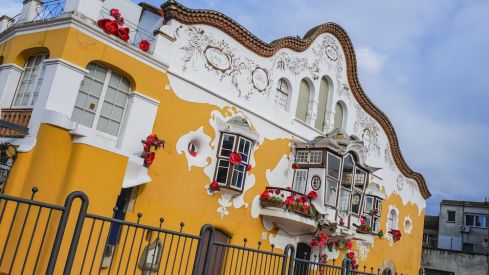
Barcelona has been chosen as the World Capital of Architecture 2026 by UNESCO and the International Union of Architects, an honor that will translate into an extensive cultural program between February 12 and December 13. In addition to the Catalan capital, several municipalities in the country will participate in the celebration, including Sant Joan Despí, which has joined as a collaborating city.
The official presentation of the initiative took place Tuesday, January 13, in an event led by the Mayor of Barcelona, Jaume Collboni, which was also attended by Mayor Belén García representing the municipality. The objective of the event is to reflect on the transformative capacity of architecture and promote the potential of Catalan architecture.In the same vein, Sant Joan Despí will promote a set of activities to highlight local heritage. Among the most notable proposals is a cycle of six conferences dedicated to key figures in Catalan architecture such as Elias Rogent, Antoni Gaudí, Josep Puig i Cadafalch, or Josep Maria Jujol. The talks, scheduled for spring, will feature the participation of various specialists
The program will also include Modernist itineraries focused on the work of Josep Maria Jujol and cultural walks through urban art, the Fontsanta park, historic farmhouses, and unique buildings. Furthermore, the celebration of Museum Night, the 48H Open House, and the Jujol Rosa Gres Chair Drawing Competition will also be specially dedicated to commemorating the capital status.
The Jujol-Can Negre Centre will also participate in the major exhibition dedicated to Josep Maria Jujol, which will be on display at the MNAC in late November, where a talk on his work will also be held.
Sant Joan Despí and its Architectural Legacy
The city boasts a rich and varied architectural heritage, both historical and contemporary, encompassing areas such as civil, industrial, commercial, and landscape architecture. Among the most emblematic elements are the Torre de la Creu and Can Negre, works by Josep Maria Jujol, as well as Casa Serra-Xaus and Torre Jujol.
In addition to this legacy, other spaces and buildings of relevance are added, such as the Hermitage of Our Lady of the Good Journey, the Mercè Rodoreda Library, the Ter-Llobregat Water Supply Tower, the TRAM depots, the Cultural and Artistic Promotion Center, the farmhouses of Can Po Cardona and Cal Tous, the FC Barcelona Sports City, or the Fontsanta and Torreblanca parks.


