
What is a travel diary? Photographs, notes, experiences and anecdotes lived during a moment, recorded in a notebook or book. It is to portray the memories of the landscapes and people you meet during the journey, with critical gaze. In this vein, the Sala Riu de Santa Coloma opts to invite and reflect with four exhibitions from the 17è Cicle Diaris de Viatges, which exhibits the work collected in different parts of the world by journalists, photographers and activists.
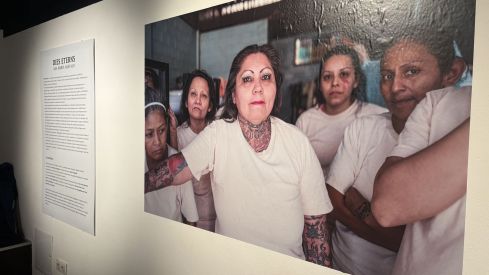
Under the motto “In shock”, the 17th cycle was inaugurated with the work of the visual storyteller and Venezuelan photographer, Ana María Arévalo Gosen, with Dies Eterns, about the conditions lived by the women in prisons in Venezuela, El Salvador and Guatemala. Her work has won the Global Peace Photo Award, Leica Oskar Barnack, the LUMIX Award for photography and she is an explorer and photographer at National Geographic.
The photographer captures situations, from mothers who are trapped by the system, young people who have been recruited into gangs, native women who cannot defend themselves in Spanish and situations of poverty and human cost of the situations in the prisons of Latin America. “I saw many cases where there were only mattresses on the floor to sleep, others where the inmates did not wear shoes and continuous isolation in the cells with only 30 minutes in the sun per day”, the photographer recounted.
In Venezuela she visited 15 detention centers and a state prison. In the former they do not give food to the inmates, it is the family who is in charge of supporting them. In the prison, if there is food, but none can be visited. For this reason, there are women who have no one to help them and prefer to blame themselves.
Next photographic exhibitions at the Sala Riu
The exhibition of Dies Eterns will last this week and the next exhibition will be already on June 2, with the local exhibition of the Colomenc Samuel Aranda, photojournalist and multi-awarded, like the World Press Photo 2011 for Photo of the Year. With the name of Nòmades, Aranda's photographs will be accompanied by the story of the journalist Martín Caparrós that the two authors reflected during their stay in the Sahel (strip from east to west, from Senegal to Sudan, between the Sahara and the savanna) of the shepherds and last nomadic communities of the area.
The third exhibition will arrive on September 29, about the situation of Kurdish women and civilians facing the consequences of the war in northeast Syria, by photojournalist and documentarian Victòria Rovira.
Starting from November 17 it will be the turn of Roberto Palomo, reporter and photographer, who will present Filles de l’oblit, the visual history of the disappearance of his great-grandfather, Silvestre Indias Carvajal, at the beginning of the civil war, and of how, 87 years later, his grandmothers recovered his remains.


