
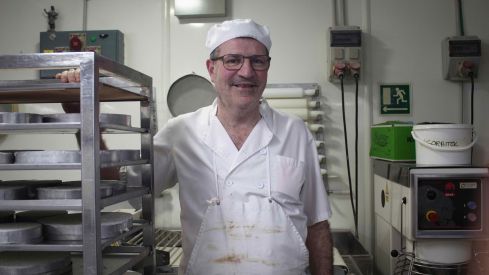
Every Easter, the shop window of Pastisseria La Palma, on Clot street, transforms. A giant mona appears, weighing over 30 kilos of chocolate, which turns the Easter tradition into a charitable act. This April 18, "La Mona Solidària" will be celebrated, a food collection disguised as a party, with giants, devils, and chocolate for everyone. This year the theme is Mario Bros, and the event will be held from 10 AM to 2 PM. Ramon Pérez, third generation at the helm of this centenary business in Clot, explains to us how the idea was born, how it has evolved over the years, and where it stands today.
How did the idea of the Solidarity Mona start?
Ramon Pérez: The first year we made a giant mona, we took it out onto the street and after five minutes there was nothing left. A lot of people came and everyone took a piece of chocolate without bringing anything in return. We thought it was not consistent with our policy as a pastry shop nor with our values, and that something with so much value could have a charitable use. We contacted the Food Bank and agreed that people would break the mona here and that, in exchange for basic necessities, participants would get a piece. It worked, and everything we collected went to the Food Bank.
And how did it evolve from that moment?
R.P.: The following year the Orfeó Martinenc participated with music, the giants came, it was full of people... and so it has continued. Everything grew very naturally, thanks to the neighborhood and the entities.
Aside from the mona, have you done other solidarity actions throughout these years?
R.P.: Yes, for 17 years we organized chocolate workshops with schools. It came about because my youngest daughter went to a school here in the neighborhood and we started it. The children came to the pastry shop, made chocolate, and what they paid went entirely to the Food Bank. Until last year, 650 children and 250 people in adult workshops passed through here. All together they contributed about 2,000 euros annually to the collection, in addition to the food from Mona Day.
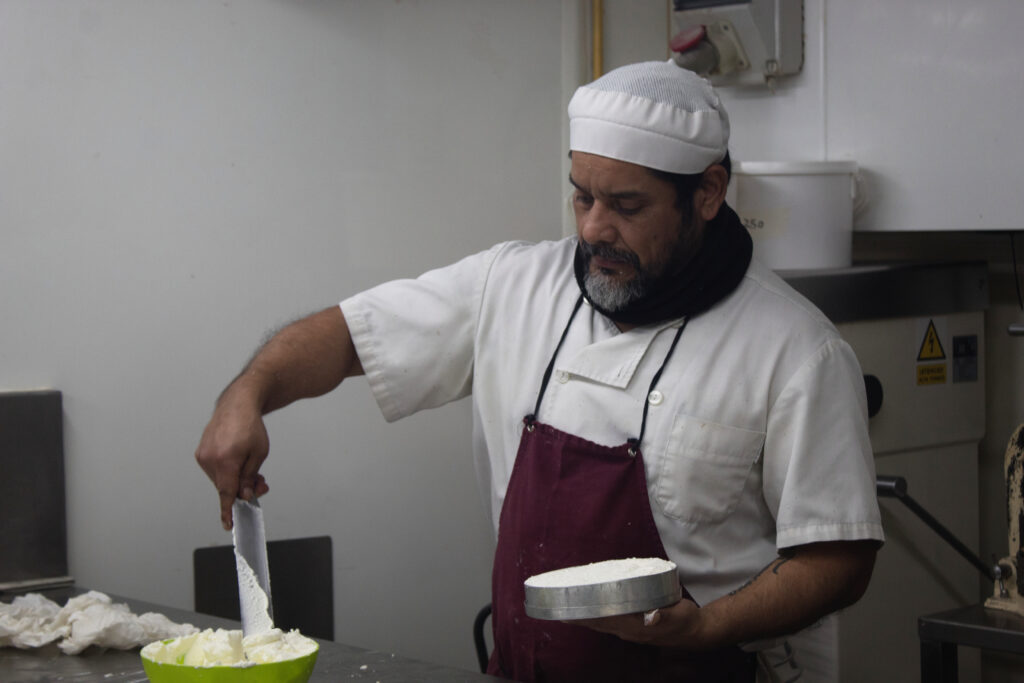
And this year you have not been able to do it.
R.P.: This year no, unfortunately. On the one hand, I've already gotten old and in the end you don't get everywhere. On the other hand, we've had staff shortages at the company and we haven't been able to take on the workload it entails. Organizing the workshops means having staff paid outside of working hours, sometimes until hours that I can no longer maintain. Although it was a non-profit activity for us (they didn't charge anything) in the end it had a real cost for the company. We've had to set priorities. But we are still making the solidarity mona.
What expense does it represent to make the mona?
R.P.: Between the work, the material and everything that it entails, the mona costs about 4,000 euros. But sometimes not everything is business in a business, especially in our work. But we have enthusiasm to do it. Furthermore, whether you like it or not, this giant mona displayed for so many months gives us a lot of visibility. Children like it a lot, we are creators of illusions. The pastry shop has always brought celebration to the neighborhood, and that's what matters.
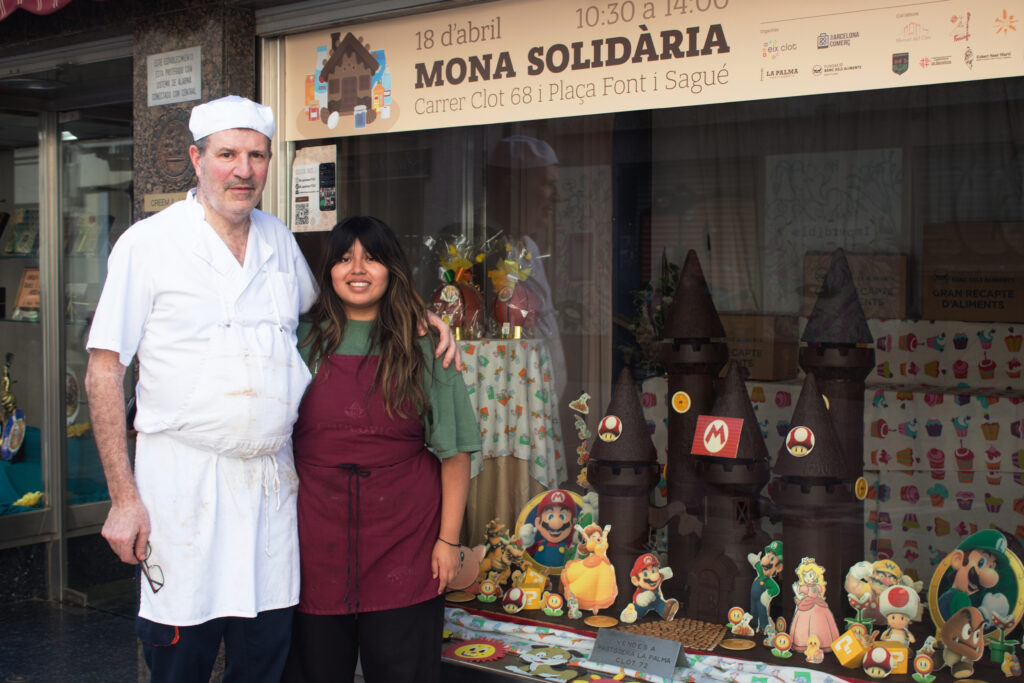
This year the theme is Mario Bros. How do you choose the theme each year?
R.P.: We try for the theme to reach everyone at once: to hook people of 50 years and kids of 10. Mario Bros works perfectly in this sense, just like last year we did Dragon Ball. Throughout the years we have gone through many themes. One that I especially remember is that of the Smurfs, which was exceptional: even people from Valladolid came to us dressed as "pitufos". One year we did Barça, which cost us a lot because asking for permits from Barça is complicated, but in the end we achieved it. Two years ago we made a giant egg that in the afternoon burst by itself, from an explosion, because some child had hit too hard. Every year something different.
And how is a piece like this year's technically made?
It works mainly with molds. In this case, a well-known pastry chef left me one, we used it and that's it. We dedicated about five or six days of work to it. Now chocolate is worked a lot with screen printing, which is like a photocopy made with a special printer: it gives a lot of color and a lot of visibility without requiring as much manual work as before. It has changed a lot. There's already a piece that has broken and we've fixed it two or three times, but we've left it like that. In the end, on the day of the event, the mona ends up breaking anyway.
How does the participation work on the day of the mona?
Anyone who wants a piece of mona must bring a basic necessity food item (rice, milk, legumes) or make a donation to the piggy bank we have outside. This year we accept both options because we have learned that it is not always practical for everyone to bring food, when very young children came they couldn't manage everything, and speaking with the Food Bank we saw that cash donations also work very well. In addition, this year children between 3 and 12 years old can sign up at the store until April 16 to have the opportunity to be the ones who break the mona.
What expectations do you have for this year's harvest?
Our enthusiasm is the same as always, but the reality is that every year it costs a little more. I remember that at the beginning we collected almost a thousand kilos of goods and now we are around 400. And this year, moreover, we will not have the 2,000 euros that the school workshops contributed. It's the first year this will happen, and we will notice it. Everything will depend on how people respond. The big problem is that the economic situation weighs. We will put in everything we can, but in the end, it is the neighborhood that has to respond. We hope they remember and that they come.
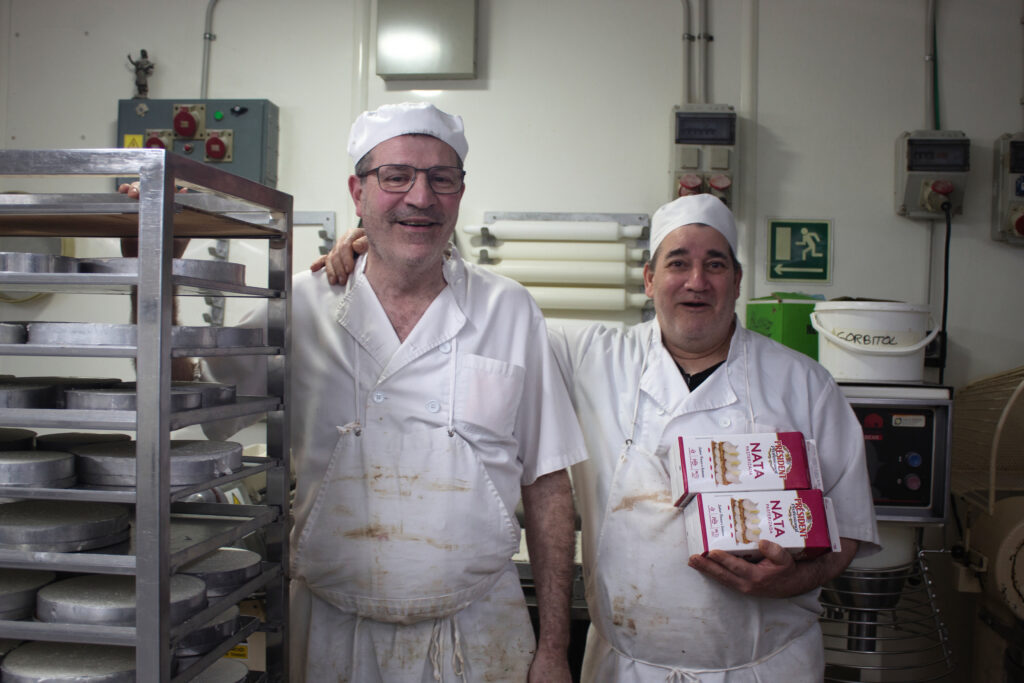
Is the profile of who comes above all people from the neighborhood?
Yes, mostly. When we did the workshops, children from schools all over Barcelona came, but the heart of the day has always been the neighborhood of El Clot
What role do the neighborhood entities play in the day?
They are fundamental. Orfeo is the one who coordinates the groups: the Diables del Clot, the Ball de Bastons, the Giants... Sometimes there are also Falcons and Castellers. There is a person, Joana, who pulls all the strings. I set the date in September and she is in charge of linking the performances with all the groups.
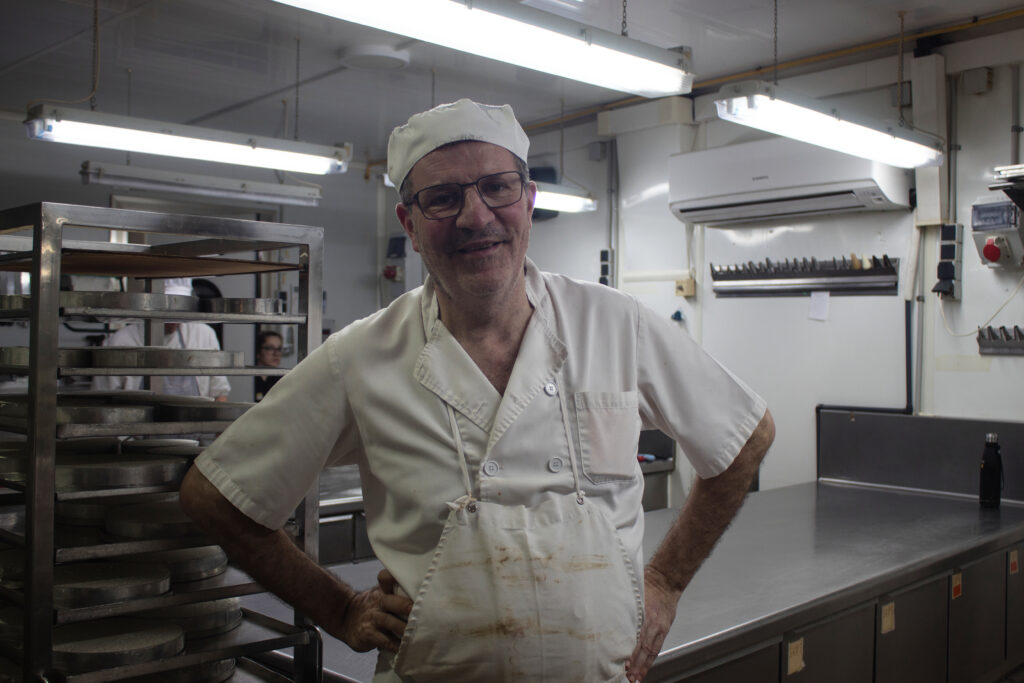
You are the third generation in the pastry shop. To what extent does the solidarity mona form part of the identity of the house?
Very much. When I was little, all the bakeries in El Clot made giant monas. Now there isn't any other left that does it. Bakeries have been disappearing, and those that remain no longer make big monas because everything costs money and because it's also not easy to find people who know how to do it. We have continued it because it is part of who we are.
The Solidarity Mona can be broken next April 18, from 10 a.m. to 2 p.m., in front of La Palma del Clot Pastry Shop. To get a piece, it is enough to bring a basic necessity food item (rice, milk or legumes) or make a donation to the piggy bank. Children between 3 and 12 years old who want to be the ones to break the mona can sign up at the store until April 16. The Mona awaits them.


