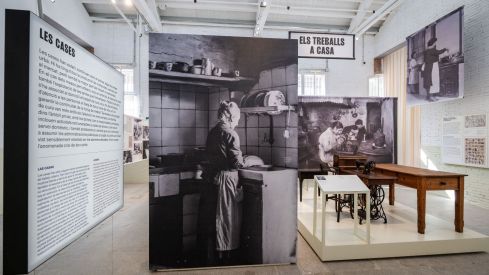
The siren will sound again at Fabra i Coats. It will not announce the start of a work shift nor the departure of thousands of textile workers, but yes the opening of a new space that looks directly at Barcelona's industrial past. Next May 9, Sant Andreu will officially inaugurate the new Fabra i Coats space. Museu d’Història de Barcelona, a long-demanded project that converts one of the old factory's buildings into a great center of memory of work and of the city's labor movements.
Located in the old Factory 10 of the industrial complex, the new facility is born with a clear will: to explain Barcelona from the perspective of work, of factories, of social struggles and also of all those invisibilized tasks that have sustained the city for decades. The museum places work at the center of the historical narrative of contemporary Barcelona and does so from one of the most important industrial symbols of Sant Andreu.
The inauguration will begin at 6 p.m. with a gesture full of symbolism: the sound of the old siren of Fabra i Coats. Afterwards will come the institutional speeches, the Ball de Teixidores of Esbart Maragall and the music of the grallers Els Petritxols, on a day that seeks to connect heritage, memory, and popular culture.
A museum to understand the working-class Barcelona
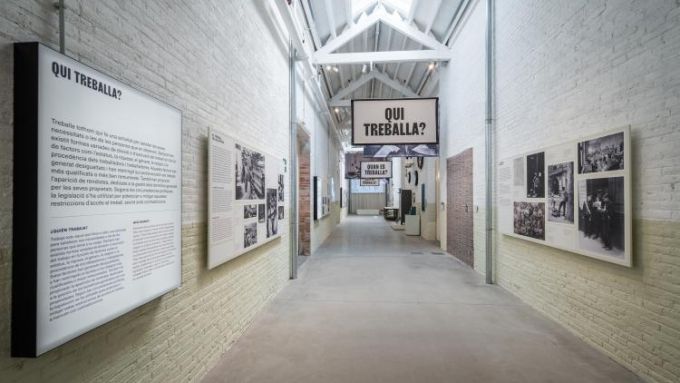
The new space is structured into three main areas. The first is the permanent exhibition La Fabra i Coats de Sant Andreu: company, work and memory, which traces the trajectory of the historic textile company between 1903 and 2005 and its relationship with the neighborhood. The second is Barcelona, city and work, a broader look at the evolution of the working worlds between the 19th and 21st centuries. And the third is a visitable reserve with more than 4,000 pieces linked to the world of work, coming from Fabra and other companies and entities.
The project claims both the workers' struggles as well as the historically invisibilized works, especially those linked to women and care. “It wants to give visibility especially to those collectives and to those types of jobs that are revised in the diary of history”, has explained the head of resource administration of the Museu d'Història de Barcelona, Pascual Bayarri, during the presentation of the project to the Neighborhood Council of Sant Andreu de Palomar.
Bayarri has also highlighted the importance of Sant Andreu in the industrial history of Barcelona: “This facility aims to place a focus of cultural, patrimonial and historical interest in the neighborhood of Sant Andreu to give it the relevance and the weight that it has always had in the history of the labor movements.”
The fight to save the memory of the factory
It must be taken into account, however, that this museum is not understood without the perseverance of the former workers and the neighborhood entities. For years, when the factory closed and many pieces ended up abandoned or condemned to disappear, several former workers began to rescue machinery, documents, and industrial objects. Among them was Pere Seda, a former worker of Fabra i Coats: “70,000 people passed through here”, he recalls, after dedicating years to preserving all kinds of machinery and documentation from the factory. In fact, Seda points out that already in the eighties some workers sensed the end of industrial production and began to preserve historical materials.
Thanks to this work, today the museum preserves thousands of original pieces: winders, tools, industrial carts, documentation and everyday objects that explain what life was like within one of Barcelona's great industrial colonies. The project also incorporates contributions from Pegaso, La Maquinista, Mercedes-Benz and other entities in the district.
A city project with Andreuenc DNA
The rehabilitation of the nave and all the museography have been financed with more than 3 million euros from the European Next Generation funds. According to Bayarri, the European auditors came to consider it “one of the best museum projects financed with Next Generation funds in Catalonia”. Beyond the industrial narrative, the museum aspires to become a new cultural hub for the city outside the center of Barcelona and reinforce the role of Sant Andreu within the Barcelona cultural map.


