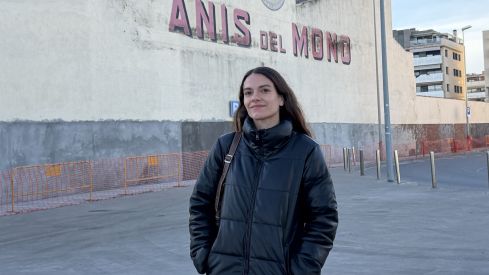
Paula Cuenda is a young woman from Badalona who was named best sommelier in Catalonia in February at the Fòrum Gastronòmic de Girona. Currently, she is the head sommelier at Villa Mas de s’Agaró, and took her first steps in this world with Josep Roca, at El Celler de Can Roca. We find ourselves in front of an anise factory, which might seem like a joke, but Cuenda sheds her expert aura and maintains that ordering a beer is no sin. The truth is that she is 27 years old and has already made a name for herself in Catalan oenology. We talk with her about wine, culture, and Badalona.
The podium of the Fòrum Gastronòmic de Girona, where you won the award for the best sommelier in the country, was completely female. This breaks with the stereotypical image of the male and veteran sommelier…
It had never happened. Each time there are more women in charge of a wine list of a restaurant or a winery. It's how it should be.
You took your first steps in the world of wine at Mas Marroch, guided by sommelier Josep Roca, from the celebrated Celler de Can Roca. How do you remember it?
I started my internship in the kitchen of Celler de Can Roca and was already in contact with wine. They gave us training on how to pair a dish and it piqued my curiosity. From there, I started studying sommelierie. And it was after covid, when Mas Marroch opened, that Josep gave me the opportunity to move to the dining room and debut as a sommelier. And I haven't returned to the kitchen!
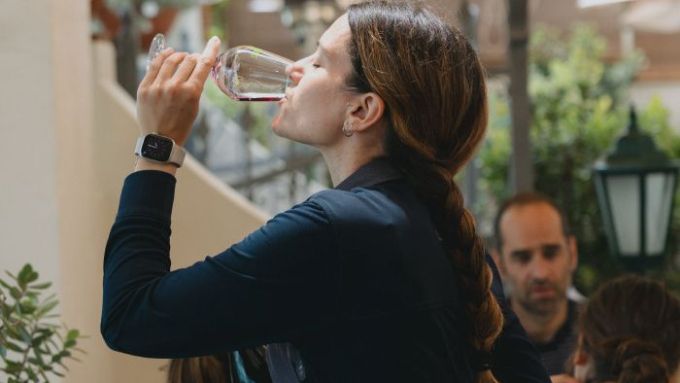
It is a substantial change…
It was something I was missing. The jump to the dining room arises from the need to know how the service went, what the client thought of it… To see the result first-hand. This contact with the client, this psychology, I like it a lot.
To be a sommelier one must have a left hand and sight, I understand…
You have to interpret the client and understand him to the maximum. There are tables that want to share the meal in private, while others want the waiter to give them play. You already see this from the entrance.
I suppose there are moments of uncertainty when the client tastes what you have recommended…
Yes! Think that if they trust you and give you carte blanche to choose a wine and then they don't like it… If they don't like it and it was my recommendation, we try to change the wine. We want them to enjoy themselves and have a good time.
When are you interested in wine?
I started to study computer engineering, and I didn't like it at all. I have always liked to cook, and I managed to work at Forn Bertran, on Mar street here in Badalona. There it piqued my curiosity.
Now you work at Villa Mas de s’Agaró. How do they live the fact of having the best sommelier in the country?
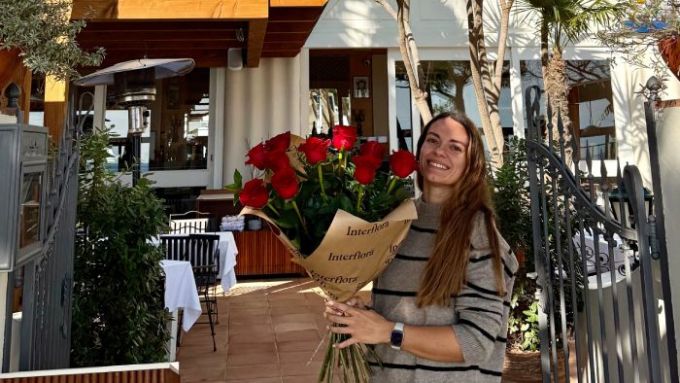
My boss, Carlos, is not very fond of contests, but I think deep down he is a little proud [laughs]. All the rest of the team, super well: they received me with flowers, we toasted… Even the clients came with gifts. It's good that, from time to time, they tell you that you do things well.
You spend a good part of the year in s'Agaró. What is your relationship with Badalona?
I have friends and family there. I come to see my grandparents and I go to La Rambla to have something.
Surely you feel the pressure of being the expert who has to choose the drink when you go to bars with friends…
They have pressure, because they order beer and feel bad! It's okay. It depends on the moment. I can also have a small beer; I like to be in the aura of the table. But it is true that when we go to a restaurant I insist on ordering a bottle of wine or that they taste something specific.
Have we lost wine culture?
It happens with some young people. There is a lot of work to do to get them hooked. There are people who already do more fun tastings and who organize visits to historical areas –which link us to the Greeks and Romans– and also to wineries. It's a way to introduce people who are not used to drinking wine. Because wine is culture, too.
Now that you speak of the ancient world, your profession has a touch of archaeology, since by tasting the wine you come to know, even, what the land it comes from is like.
By tasting a wine you can understand everything that has happened: how its acidity is, how its fruit is, the volume in the mouth, the density… From all this you know how they come to develop a wine: you strip it bare.
Do we have good wines in the metropolis?
And so much! Here we have a great heritage like the DO Alella, the smallest designation of origin in Catalonia, which is powerful both in sparkling wines and in whites. And the Maresme area is also interesting for the sea, which brings a saline touch to the wine, and for the sauló, which is the typical soil they have in Alella. And we have Penedès right next door, a great benchmark not only in cavas, but also in Corpinnat. We have a lot of level in Catalonia.
And do we care for it enough?
We know how to sell it better, but people should be a little more interested in it. It is a great legacy that we have in the land, and if people were interested in it, Catalan wine could be positioned much better.
Can anyone be a sommelier?
I believe so. It can be trained. It's vocational, but there's a lot of work behind it. Doing a wine introduction course doesn't make you a sommelier. To be one, you have to be working with the public.


