
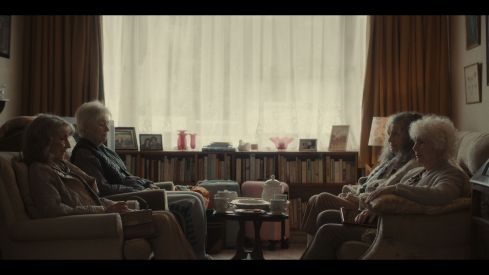
The Festival Internacional de Cinema de les Persones Grans de Barcelona, La GRAN pantalla, will celebrate its eighth edition from June 30 to July 4 at its usual venue, Cinemes Girona, in Barcelona's Eixample district. The Barcelona cinema will host the bulk of a program that includes eleven feature films and seventeen short films, which can be enjoyed completely free of charge by reserving tickets in advance.
Organized by the Associació Cultural elParlante, in collaboration with the Department for Older People of the Barcelona City Council, the festival faces a new edition with the firm purpose of "claiming that growing old is the best thing that can happen to us in life," as stated by its director, Alfredo Cohen, who points out that the audiovisual industry has "the urgent challenge of breaking with the stereotypes that marginalize more than 20% of the population."
With a program that avoids paternalistic views, Cohen defends that "older people have memory, their own voices, different perspectives, many illusions and a great sense of humor," consolidating the festival not only as a cinematic event, but as a space for "community health and rebellious pride."
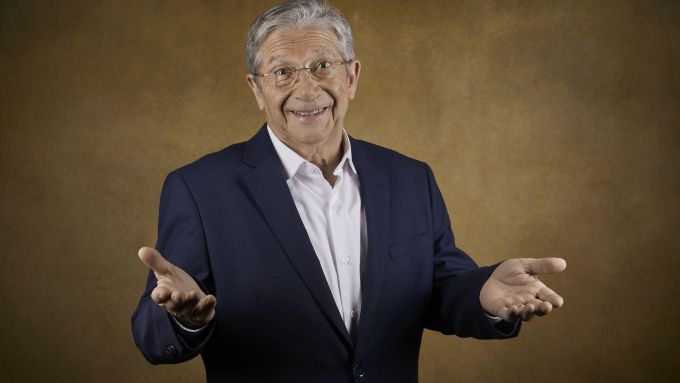
Honorary Award to Joan Pera
In this eighth edition, La GRAN pantalla will present its Premi Honorífic to actor Joan Pera, in recognition of an exceptional artistic career that has marked our history of entertainment. Awarded the Premi Gaudí d’Honor-Miquel Porter 2019 by the Catalan Film Academy and the Creu de Sant Jordi, Pera is one of the most beloved faces and voices of our culture.
With this award, the festival wants to honor an essential reference who perfectly embodies the spirit of La GRAN pantalla: to demonstrate that maturity can be lived on stage and in front of the camera with an absolutely inexhaustible passion, energy and sense of humor. So far, Montserrat Carulla, Carme Elias, Carme Sansa, Teresa Gimpera, Josep Maria Pou and Vicky Peña have been recognized in previous editions.
Stories of dignity and desire in maturity
The screenings of the official selection of feature films will kick off with the inaugural film Calle Málaga (Morocco, 2025), directed by Maryam Touzani and starring the acclaimed Carmen Maura, which places the viewer in Tangier to narrate the emotional story of María Ángeles, a seventy-nine-year-old woman whose life is shattered when her family decides to sell the family apartment, forcing her to stand up to avoid losing everything.
From Brazil come two films about dignity and civil resistance. El sendero azul (2025), by Gabriel Mascaro, depicts the rebellion of a seventy-seven-year-old woman who flees to the Amazon to fulfill her dream of flying after being expelled from her own life by a new government law; and Vitória (2025), by Andrucha Waddington, a production based on real events about an elderly woman who defies the violence of her neighborhood by filming drug traffickers to become a force for change for the community.
From here, the program will also focus on the reality of nursing homes. On one hand, the American film Familiar Touch (2024), by Sarah Friedland, offers an intimate and tender portrait of the adaptation, fragility, and learning of routines of a woman with dementia upon entering an assisted living facility. On the other hand, filmmakers José Mari Goenaga and Aitor Arregui present the acclaimed Maspalomas (Spain, 2025), a fiction in which an accident forces Vicente to live in a residence where he is forced to hide his homosexuality, a difficult starting point that will lead him to confront his past and discover new forms of friendship and affection.
Another of the great conceptual axes of this year's festival will be the exploration of maturity linked to desire and the sovereignty of one's own body, uniting fiction and documentary format to break social taboos. In this sense, the French production La babosa y el caracol (2024), by Anne Benhaïem, brings a dose of humor and delicacy in building a nuanced story about unexpected love in maturity. This perspective is bravely complemented in the non-fiction section with Siemprevivas (Spain, 2025), by Mar López Zapata, a documentary that portrays the reality of six sex workers from the Raval neighborhood of Barcelona who, in their maturity and with mutual support, actively claim their right to continue working and to make their own lives visible.
The program is completed with two historical and musical perspectives that explore memory. Hugo de la Riva proposes in Solo pienso en ti (Spain, 2025) a story set at the end of Franco's regime, connecting human and professional struggles through memories. Finally, historical and musical memory is present in On eres quan hi eres? (Spain, 2025), where filmmaker Jana Montllor reconstructs the legacy of her father, singer-songwriter Ovidi Montllor, through an emotional journey through the family archive.
Finally, the closing will be led by Plaza nueva a las diez (Spain, 2025), by Carmen Tortosa. The film shows how, every week, a group of elderly people transforms Granada's Plaza Nueva into a space where dance becomes an expression of vitality and community celebration.
The program will continue during the month of July at Caixaforum Barcelona and also at the Caixaforum+ online headquarters. In the coming days, they will publish the titles of the rest of the program and complementary activities.


