What cultural muscle do Barcelona and the metropolitan area have to host exiled artists who want to work here? Is there a risk that initiatives are more symbolic than structural? We talk about it with artists who have international protection, who live in the metropolis and who, despite the challenges of arriving in a new country –such as bureaucracy and the introduction to a new culture–, have managed to integrate their art into the city's cultural narrative. We also know the vision of entities and institutions that look after them.
Eddy Laverde is Colombian and a theater researcher. She has lived exiled in Sant Cugat del Vallès for four years. For months, she suffered daily harassment for having denounced the murder of her younger brother, who disappeared one day before the Estallido, a cycle of civil protests in Colombia against the government of Iván Duque in 2021. The judicial process she initiated together with her family put this Colombian in the spotlight. The harassment escalated when they began to persecute the students of the theater classes she taught in a humble neighborhood of Bogotá. That's why she decided to contact a human rights association that recommended her to leave the country.
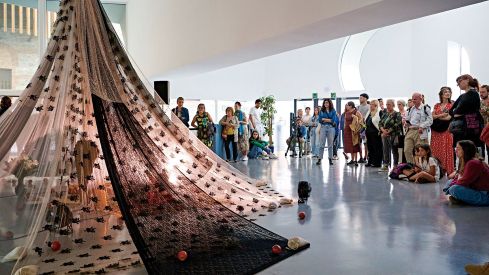
After that nightmare, the actress explains that, little by little, she has rebuilt her life. Theater, her passion since childhood, has helped her. Her show Yuyay, which means memory in Quechua language, is a monologue about her story that has already been performed in different metropolitan cultural spaces. And in January she premiered a second work, Ñucanchi, with the company Abya Yala, formed by migrant women that Laverde gathers in Sant Cugat.
“The stage has been a great meeting point with people from the sector and has allowed me to be calm to be able to talk about my story,” says this actress who in Bogotá was a member of La Candelaria, a company with sixty years of trajectory. Currently, she combines acting with a doctorate with which she investigates the relationship between Colombian and Catalan social theater through the company La Calòrica. Previously, she had trained in theater at the Institut del Teatre and had completed a master's degree in Theater Studies to understand the Catalan theatrical system and enter it.
How does Barcelona help exiled artists?
Laverde's story is not an isolated case. Although there is no official count of how many artists with asylum rights live in the metropolis, to get an approximation we have contacted Artists at Risk, a worldwide association based in Helsinki that since 2013, thanks to a network of more than 300 entities, annually offers thousands of artistic residencies in cities such as Berlin, Cambridge, Reykjavík, Tunis, Sofia, Rome, and Barcelona.
The data shows that, since 2019, the Catalan capital has hosted fourteen of these artists, some of them as high-profile as the Russian feminist and punk group or the Ukrainian actor Aleksei Iúdnikov. Each year, Artists at Risk conducts a first “risk assessment” with the applications it receives on its website and manages the asylum application procedures, the search for accommodation, and a job. In the case of Barcelona, the association No Callarem takes care of it.
The latest figures collected by the global entity indicate that, in 2025, 1,302 artists requested asylum from it and Barcelona hosted four of them: Osama Khalid, actor and painter from Sudan; Marwa Radi Abu Raida, Palestinian writer; Mahsa Mohebali, Iranian writer, and Hossein Zoghi, journalist and actor also from Iran.
We spoke with the Sudanese Osama Khalid days after his residency in Barcelona ended. A graduate in Fine Arts from the University of Science and Technology of Sudan, he fled his country because, after the Sudanese revolution of 2018, the conflict grew exponentially until war broke out in 2024. “Living under constant bombings was extremely difficult,” describes this painter.
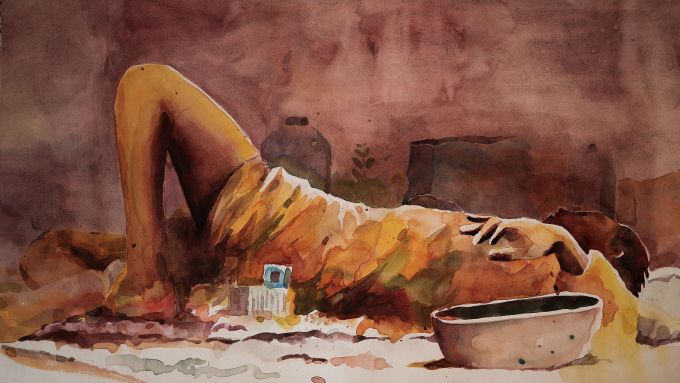
“I was looking for stability and it didn't seem like the war was going to end. My family was forced to leave. Obtaining a visa was difficult, but thanks to a friend I contacted Artists at Risk. They interviewed me and helped me move from a dangerous environment to a safe place,” Khalid continues to explain, whose works focus on daily life in Sudan and on the homeless.
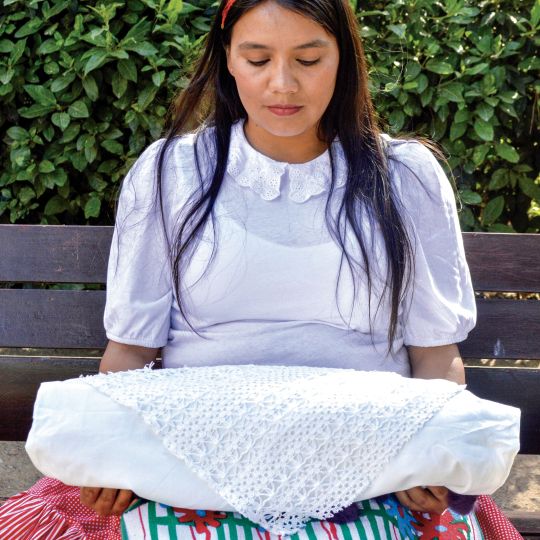
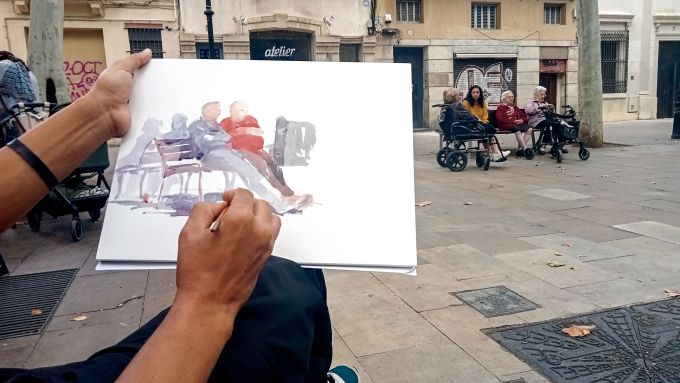
Thus, on September 5, 2025, an artistic residency began in Barcelona: “From the first moment I felt a very strong connection with Spanish society, and with Catalan society in particular. I perceived it as an open and welcoming community, and I quickly felt a sense of belonging.” For five months he worked in the painting workshop of Rafa Castañer, in the Poblenou neighborhood, an experience that Khalid summarizes as “exceptional.” “Rafa has been a very inspiring figure. Not only has he been close and understanding, but he has encouraged me to grow artistically and personally. I consider him more than a supervisor; he is a very close friend,” he adds.
Castañer himself reflects thus on what he has contributed to Khalid: “We won't know until a few years from now, and only he will know, but I believe I have offered him difference, exactly the same as he has offered me. We are antagonistic and at the same time complementary. I have been able to introduce him to my world and share it, with humility and an honest attitude.”
Apart from his daily life with the Barcelona painter, Khalid has come into contact with artists from La Escocesa, also in Poblenou, which is one of the cultural spaces with which No Callarem networks. Additionally, the entity has worked from the beginning with the CCCB, and over the years, facilities such as the Ateneu Popular 9 Barris, the Ateneu Barcelonès, the PEN Català, the Centre d’Arts Santa Mònica, Espronceda, and the Fabra i Coats Creation Factory have joined.
“It is very important to have support”
From Artists At Risk, it is clear that this cultural network is key for integration. “It is not easy to be an artist when you are from Barcelona, but it is fifty times more difficult when you come from another place. It is very important to have support mechanisms,” share Marita Muukkonen and Ivor Stodolsky, co-founders of Artists at Risk, from Colombia via call.
How did the collaboration between the global entity and Barcelona germinate? It all began in 2018, when No Callarem, still without municipal support, hosted the rapper from Kenya, Grammo Suspect. That year, Muukkonen and Stodolsky came as speakers to the BccN Barcelona Creative Commons Film Festival of the CCCB. They took the opportunity to meet at the Parliament of Catalonia with who was then the city's first deputy mayor, Gerardo Pisarello, and the former deputy mayor for Social Rights, Jaume Asens, to propose how Barcelona could be a host city for exiled artists.
“It often works like this: first you have to get the artists to come, politicians see how they get involved in the communities and then the program starts. We do it in several cities”, the co-founders relate. The municipal and Generalitat support was consolidated in 2022 with the Ukrainian actor Aleksei Iúdnikov, who was in Russia at the time of the invasion. Thanks to Artists at Risk he did a first residency in Helsinki and later in Barcelona, specifically at Fabra i Coats. Eva Sòria, director of Innovation, Knowledge and Visual Arts of the Institute of Culture of Barcelona (ICUB), explains that it was an “emergency response” and a support that has consolidated over the years.
Double support: cultural policies and themes
Beyond Artists at Risk, what programs can an exiled artist access in the metropolis? From the ICUB they detail that “the bases of the general call for public subsidies do not have a specific reception policy for artists with the right to asylum because they are broad enough and the criteria already respond positively to them”. We would be talking about aspects such as, for example, the work having a social theme or an impact on the territory. Sòria argues that “a specific aid would respond to a type of expense that should come from elsewhere”.
If we look at projects that the City Council supports because they host artists or make visible the fact of living in exile –or, broadening the focus, having migrated–, stand out , an entity that since 2004 helps refugee artists, or Red Teja, in which the Centre d’Arts Santa Mònica and La Escocesa collaborate. Another notable initiative are the International Writing Residencies of Vil·la Joana within the Barcelona City of Literature program.
If we talk about art exhibitions that highlight exile or the act of migrating, Sòria refers to the exhibition Like stones in the palms, embers and flame, curated by Chiara Cartuccia, which can be seen until May 31 at La Fabra Centre d’Art Contemporani and which addresses, from international voices, the relationship between destruction, ruins and stories of anti-colonial resistance in the Mediterranean region. Also noteworthy is the collaboration that this spring La Capella is doing with the Palestinian curator Manar Idrissi and local artists Nora Ancarola and Pamela Martínez Rod.
In addition, some residents of Artists At Risk participated in March in the Cinestèsies cycle, cinema and thought of the Ateneu Fort Pienc. Khalid's paintings could be seen there and he himself offered an activity with Castañer. “We support artistic directors who put these issues on the table, as it cannot be otherwise,” they conclude from the ICUB.
Presence, but in peripheral circuits
It is undeniable that there is help. However, the consulted artists share that it is laborious to make a name for oneself in a Barcelona cultural ecosystem that can sometimes be hermetic. This is how Laverde has experienced it: “I have participated in cultural spaces, but always alternative ones. I have not had the opportunity to do a show with a Catalan company or to participate in any space with professional people. I have great discipline towards the craft, but until now I have dedicated myself to administrative procedures to rebuild my life.”
Be that as it may, and although it is a slow process, the Colombian is proud to have brought Yuyay to venues in l’Hospitalet, to Barcelona civic centers, to the Ateneu Candela in Terrassa or to the recently disappeared theatrical space Periferia Cimarronas in Sants, dedicated to Afro-descendant theater. “I have not reached the small venues in Barcelona like the Tantarantana, which have more media resonance, due to many dynamics of the sector, such as the fact that the theme sometimes does not interest,” she laments.
However, the creator envisions a horizon of hope, because Yuyay was performed in March at the theater of the Universitat Autònoma, a fact she considers “very important, since despite being a small-format theater, shows have been performed there that have ended up at the Beckett.” In addition, now that she already masters the Catalan language, she has written Ñucanchi, a work that she recently premiered at the Ateneu del Raval. Opting for Catalan has been a linguistic awakening that she trusts will materialize in job opportunities: “As in any country, theater must be done in the language of the territory.”
In Khalid's case, he comments that language has been the main challenge to access the Barcelona cultural ecosystem. “Despite this, I have worked to overcome it by learning Spanish and using English. Learning Catalan has been more difficult. There are few resources in my mother tongue [Arabic],” he explains.
From the associations' point of view, another difficulty in fostering the integration of exiled artists is the resources they have. With the support they receive from the Ajuntament de Barcelona, the Diputació de Barcelona, the Ministeri de Cultura and the Ministeri d’Afers Exteriors, the entities Artists at Risk and No Callarem juggle to offer artists everything they set out to: register them with the Seguretat Social, manage their residence permit, find them accommodation, hire them within the entity and offer them psychosocial support. As stated by Fernando Paniagua de Paz, from No Callarem, housing problems in Barcelona make it difficult for all artists to live here and, for this reason, they have been collaborating for years with other creation and artistic residency spaces such as Konvent Zero, in Berguedà, or La Cremallera, in Ribes de Freser.
Despite the difficulties, Artists at Risk celebrates that Barcelona is one of their “most collaborative and stable” cities. An example of this is that No Callarem has recently won, together with a dozen entities, a grant called Europa Creativa which is awarded to international networks and with which it will be able to allocate, for three years, one million euros to the reception of artists. “This helps us to project with security,” points out Paniagua de Paz. Besides, the global entity regularly receives other European funding.
Why are these voices necessary?
However, there is a fundamental question in this report that has to do with the artistic fact itself: why are the voices of exiles necessary? “They bring us diversity and richness. A city that gives voice to artists who are in extreme situations enriches the cultural debate,” they state from the City Council. From No Callarem they affirm that “the bond established between the hosted artists and the experimentation space is very rich and positive.”
In short, Barcelona and the metropolitan area are not only spaces to take refuge from the noise of bombs or threats, but a host city that has a cultural fabric capable of offering creative continuity thanks to entities, independent spaces and public institutions. It is not an easy path, but the current cultural ecosystem makes going into exile not a constant renunciation, but also a blank canvas ready to create anew, as the Sudanese painter expresses: “I do not see Barcelona as a place of exile, but as a much broader space of possibilities compared to the limitations I have experienced.”


