
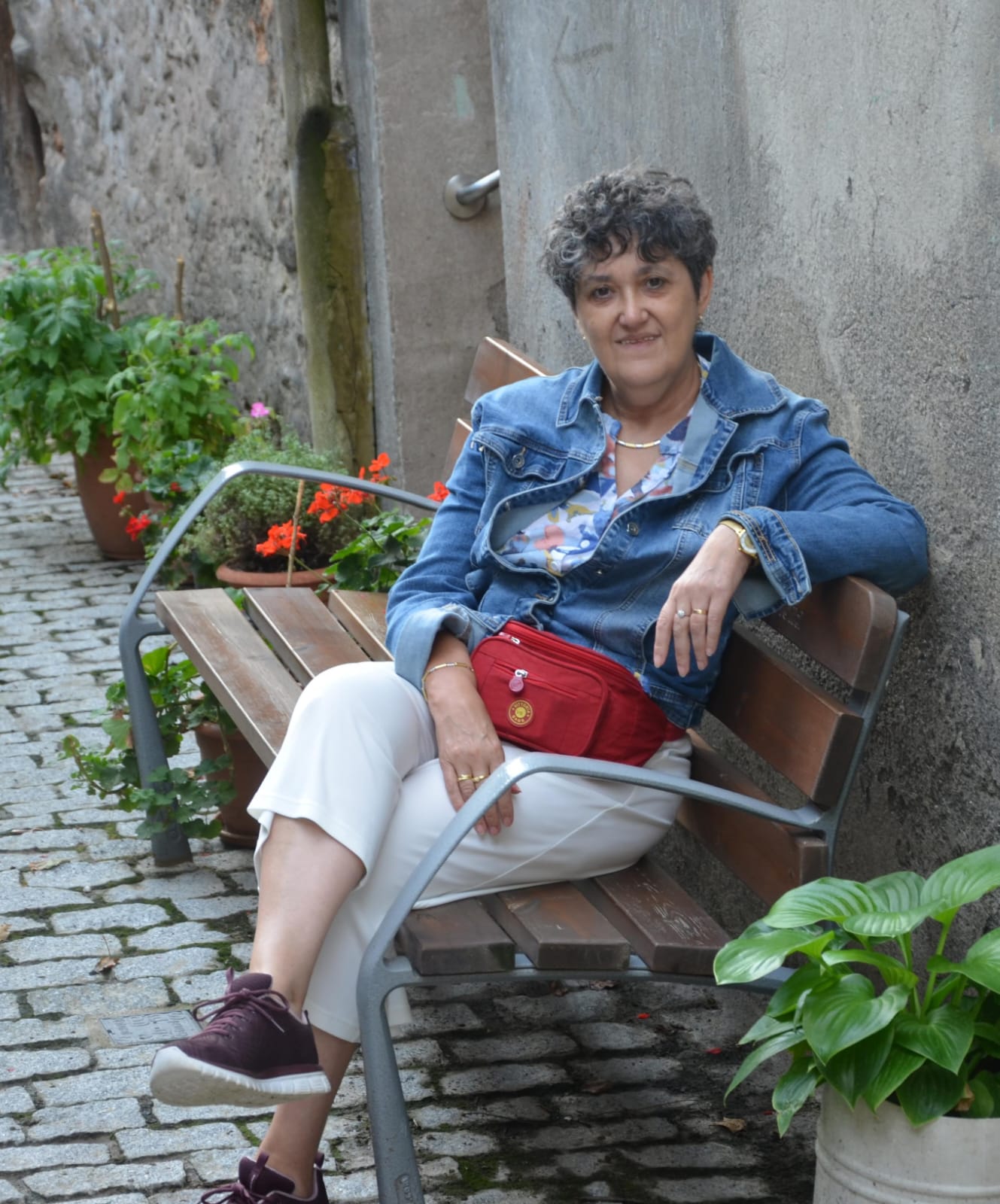
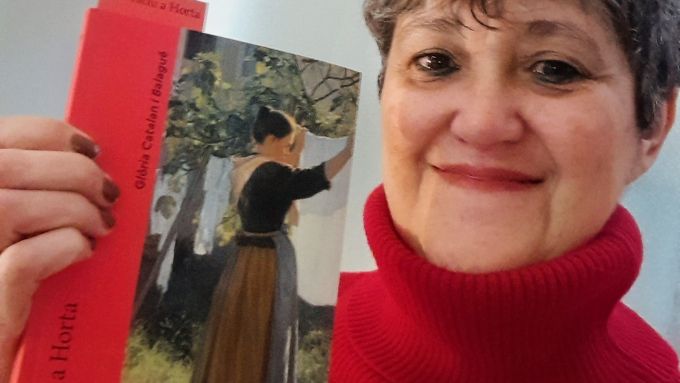
In Horta there is a writer who, little by little, is making her dream come true: to be a writer. Although she has been dedicated to it for many years, it is now that Glòria Catalan is reaping the sweetest fruits of her career. She has just published, with the independent publisher Punt Volat, Un estiu a Horta and, in just three months, it is already in its third edition.
For her, Horta is not just a neighborhood in Barcelona. "Horta for me is everything," she says. She was born there, has always lived there, and for thirty-three years worked there as an herbalist in its market.
Horta, much more than a neighborhood in Barcelona
"My whole family is from Horta. We are among those who say we 'go down to Barcelona' because for us Horta is much more than a neighborhood." An idea that is also reflected in her novel: "Being born in Horta is a privilege and living there even more so," she says proudly.
This deep connection with this place is the seed of her novel, which transports the reader to the summer of 1931, shortly after the proclamation of the Second Republic. The choice of this era is not accidental. Catalan wanted to recover a time when her neighborhood still preserved a very unique identity, when wealthy families from Barcelona went there for summer holidays and there was strong farming activity and traditional trades such as that of the washerwomen.
"I could have chosen any era, but I wanted to highlight that time," she explains. There is also a personal component in this choice: it is the era of her grandparents and her parents, whose stories have been a source of inspiration to create her characters.
A writer at the Mercat d’Horta
Glòria has been working behind a stall at the Horta Market for more than three decades. During this job, the writer has been accumulating the popular wisdom of her clientele. "You learn a lot from what they tell you," she acknowledges.
At the market, she assures, people don't just buy: they also share experiences, concerns, and family memories. "They tell you very personal things, they even come looking for psychological comfort. And I listen. For so many years you build up a pantry and in the end, characters and stories emerge," she explains.
Now, with the publication of her latest book, this relationship with the neighbors has intensified, she says. Many people have approached her to congratulate her, ask for a dedication, or tell her new stories about their families. Material that will probably continue to feed future works.
Her secret to success
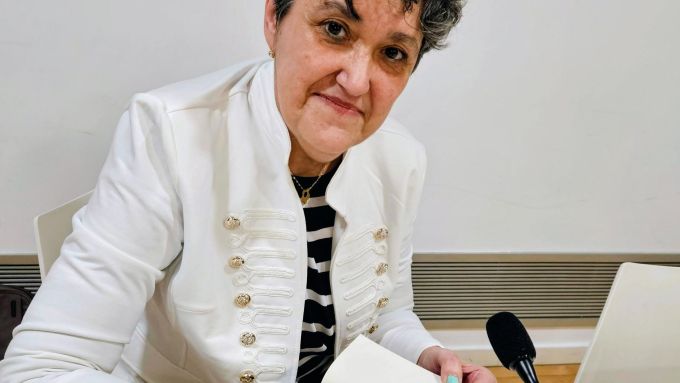
Her will is to reach everyone and write from the heart. That's why she has sought a plain, close, and pleasant language. "I wanted to create a language that could reach everyone and that everyone could understand," she reflects. The readers' response has confirmed that she has succeeded: from a ten-year-old girl to a ninety-six-year-old reader have shared their experience with the book with her, among others.
The success of Un estiu a Horta also demonstrates how much the neighborhood awakens emotions among its residents. In just three months, three editions have been published. "Anything that says Horta is already too much," she comments. She is convinced that the title has been key because it connects directly with a shared identity.
"Horta is a world apart, we Hortencs have this feeling," she explains. Despite urban changes and the passage of time, she believes that the neighborhood still largely preserves this village essence. And her readers are enjoying the references she makes to popular streets and spaces, and many have turned reading into a way of traveling back in time. Precisely, she adds that during the Horta Festival, in September, a literary route will be held through the places in Horta that appear in the novel. It will be an opportunity to discover the corners where the story takes place and learn more about this Barcelona neighborhood.
A trilogy to continue telling Horta's story
The success of Un estiu a Horta is not an end point, but the beginning of a project that goes further: a trilogy dedicated to her neighborhood. The second novel, which she is already working on, will be set in the post-war period and will maintain the same characters, who will evolve over the years. The third will be set in the sixties, a particularly significant era for her because it coincides with her childhood.
Regarding why she talks about the past, she admits that she has no interest in writing about current events, because she says we already know this reality well enough. She prefers to look back because she considers it essential to preserve memory, especially for new generations. "I think it's important not to forget our history," she concludes.
Writing as therapy since childhood
Her relationship with writing goes way back. When she was eight or nine years old, she already said she wanted to be a writer. Although she was often told it was a profession one couldn't live from, she continued writing. The first big boost came with an award at the Jocs Florals d'Andorra in 1983, a recognition that gave her strength to continue pursuing her dream.
Since then, she has cultivated various genres: poetry, articles, children's stories, theater, short stories, and, in recent years, novels. Nevertheless, she acknowledges that it is in this last genre where she feels most comfortable because it allows her to bring together many forms of writing.
Now she is about to retire from her job at the Market. And it is at this moment that she hopes to find even more time to dedicate to writing. An activity that is a whole personal space for her: she says it helps her disconnect from routine.
During the day she thinks about all her characters: "I carry them in my head all day," and then she takes them from her imagination and puts them on paper so everyone can enjoy them.


