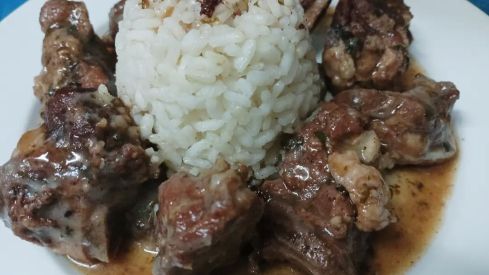
Pere Cardona has spent over ten years in the kitchens of bar La Nova Farga, in Barcelona's Sants neighborhood. However, for the past two years, he has been serving his customers traditional recipes that most Barcelonians have likely only heard of or are completely unaware of.
We are referring, for example, to dishes such as agafa-sants, ginestada, figatell, onion soup, bread soup, onion with a punch, carutx, panadó, or torronada, among many others. In Cardona's case, he had always known some of these recipes, but he began to recreate others from the first Catalan medieval recipe books published between the 14th and 16th centuries, such as Llibre Sent Soví, Llibre de Coch, and Llibre d’aparellar de menjar. "I already knew them in passing, but when I started to investigate them thoroughly, I saw that there were recipes that could be made without any problem and perfectly adapted to the daily life of the bar," the chef explains.
We're talking about dishes like agafa-sants, ginestada, figatell, onion soup, onion with a punch, carutx, panadó, or torronada, among many others.
According to Cardona, from then on he began to "dig into" these recipe books and, nowadays, he shares these recipes through platforms such as the menu at La Nova Farga, where both he and the owner of the establishment – Ramon Puñet – explain the origins of the dishes; his Instagram account; or even the program El Somiatruites, broadcast on the local district radio station, Sants3Ràdio. So far, he has done so with more than twenty dishes. "From my present, I want to take care of Catalan gastronomic heritage. And I'm not just talking about dishes like fricandó or crema de Sant Josep – popularly known as crema catalana – which should be everywhere, but about those that are disappearing in Barcelona," he emphasizes.
A "Denatured" Kitchen
In Cardona's view, Barcelona's cuisine is "denatured." "I'll say it as it is: in Barcelona, we are too contaminated with ramen, empanadas, fast food, and all these new trends, but the traditional cuisine of the Catalan Countries is little known," he argues.
And it is that, although the chef accepts that "there must be a bit of everything," he also points out that in the Catalan capital the balance has been broken and that the city now runs the risk of losing its culinary past. "There are still those who snicker when you put a stuffed apple in front of them or who look at you as if you were crazy when you talk about an omelette with sauce," he insists, adding that these are some of the symptoms that show this ignorance of centuries-old dishes.
In this regard, the chef states that, despite Barcelona positioning itself as one of the centers where "Catalan cuisine is resurging," in practice this is still a "minority" trend compared to the rest of the franchises that proliferate there and are detached from their historical and social context.
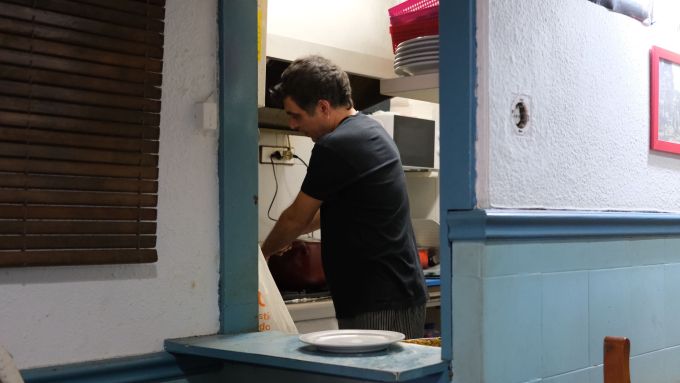
In fact, he emphasizes that, beyond Barcelona's centralism, it is the other Catalan territories that "more intensely keep the flame of the country's gastronomic tradition alive." "For example, 'menjar blanc,' a dessert similar to 'crema de Sant Josep' made from almond milk, rice flour, sugar, and cinnamon, is little known in Barcelonès, but in Tortosa it is very common," he cites
It is for this reason that, according to Cardona's experience, Barcelona is one of the places where the loss and forgetting of traditional Catalan recipes are becoming increasingly profound, given the ever more pronounced rise of "organized catering" businesses – owners with five or more establishments – that prioritize consumption over gastronomic culture.
Cooking with Curiosity
Broadly speaking, Cardona's objective is to disseminate traditional Catalan recipes in Barcelona "to prevent them from being lost," but also to make a cuisine "that doesn't have to be expensive or complex" accessible to everyone.
“We are too worried about what's to come and new trends, but it's important to remember that our cuisine has always been very rich and can easily be made at home if you have a bit of curiosity,” reflects Cardona, who uses himself as an example when he says he only needed to consult a book and his own stove. “I'm not a historian, but a restless cook,” he concludes.


