
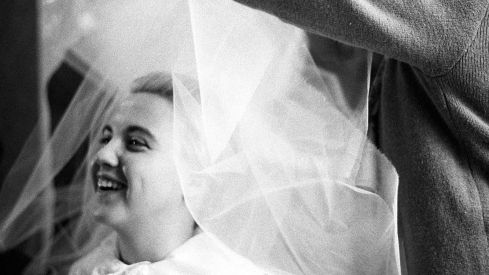
A few months ago, DHub Barcelona mounted the ANTIFÉMINA exhibition, a show built upon the photo-literary work of photographer Colita and writer Maria Aurèlia Capmany. This exhibition had its origin in a project born in 1976 when the friendship and relationship between photographer and writer crystallized into the project of shedding light on the condition of women in those years. Working as a team, one with her archive and camera and the other with her pen, they culminated the work in a book. Despite its feminist manifesto and the still present pressure of censorship, it was published in 1977, one year after Franco's death and one before the 1978 Constitution. It was edited by EDITORA NACIONAL, in photobook format with a print run of 3,000 copies and a rather deficient edition quality. But it lasted little because a few months later, upon the dismissal of editor Àngel Sánchez-Gijón, a progressive professor and academic, censorship acted, albeit with delay, and the books were withdrawn from the market and were mostly destroyed.
As a result, the work and its combative feminist discourse remained practically invisible for more than forty years until 2021, when the Barcelona City Council, Terranova publishing house, and the Colita Archive promoted a new edition that quickly sold out. And finally, this 2025, on the occasion of the aforementioned exhibition, it has been reissued as a catalog for it.
Perhaps it is worth reviewing, even if very briefly, the personality and trajectory of the two authors.
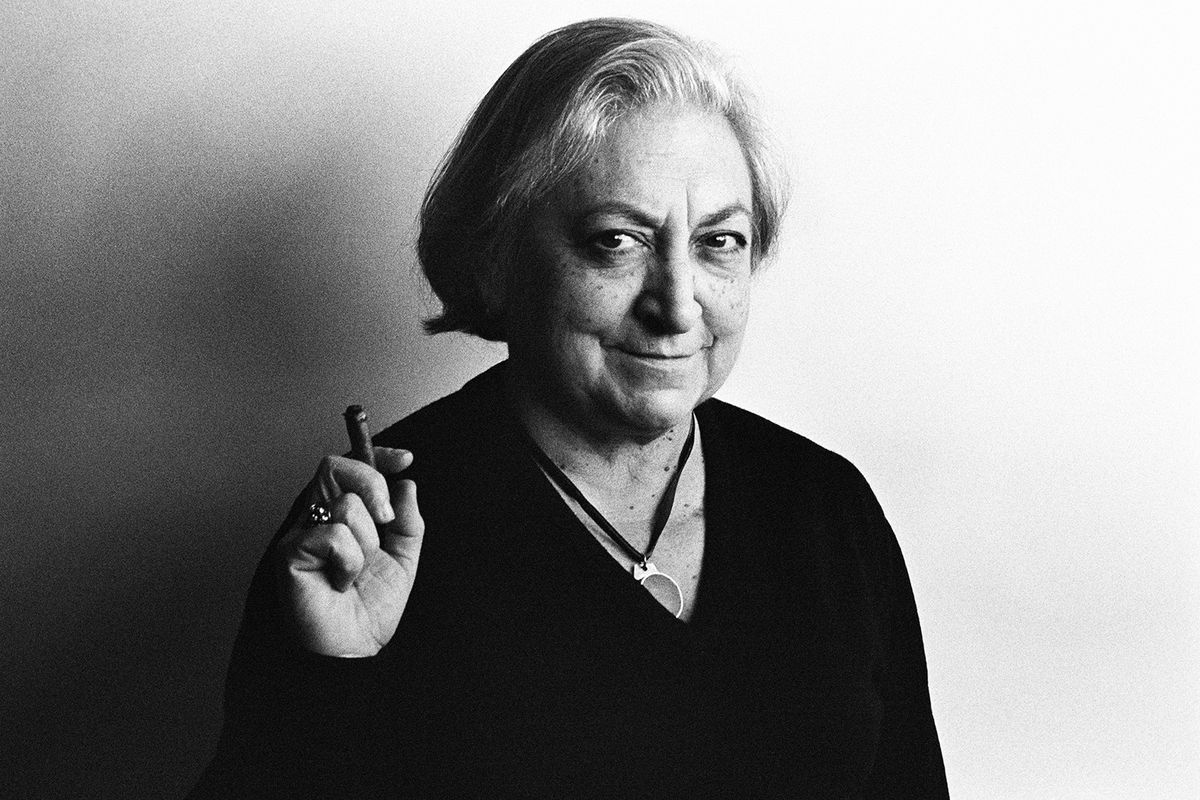
Isabel Steva Hernández, Colita, born in Barcelona in 1940, was linked to an extraordinary generation of 20th-century Catalan photographers such as Miserachs, Pomés, Català Roca, or Oriol Maspons, whose assistant she was in his studio. Throughout a career of more than 40 years, she worked for different press media and covered a great diversity of themes from those years, from the world of gypsies, flamenco, entertainment, or the Gauche Divine. She also photographed various progressive citizen movements and especially those linked to feminism. Her figure was recognized with numerous distinctions, among which are the Creu de Sant Jordi in 2004, the Premi Nacional de Fotografia in 2014, and the Medalla de Oro al Mérito de las Bellas Artes in 2022.
Maria Aurèlia Capmany was born, also in Barcelona, in 19 18 ; graduated in Philosophy and Letters and high school teacher, from 1947 she began her career as a writer. Later she became involved with the theatrical world through the Adrià Gual School of Dramatic Art which she founded together with Ricard Salvat. Feminism was another of the axes of her life and she wrote several essays on the subject that had a notable impact. She also acted in the political sphere linked to the PSC and held the Department of Culture of the Barcelona City Council.
The Colita-Capmany tandem worked perfectly. As the Professor of Contemporary History Mary Nash points out in her prologue: « Despite their age difference, both have in common a very unconventional life opposed to the Francoist archetype of a submissive woman. Empowered, rebellious, transgressive, and nonconformist figures... their common left-wing feminist commitment was the bulwark for reaching a consensus on the book as a team.»
Colita's photos are accompanied by Maria Aurèlia's texts with a dialogue that successfully enhances the two languages: Image and Word. It is clearly appreciated that we are facing a team work that has been done by four hands.
It is interesting to note that the gaze of the two authors contemplates the situation of women in the most diverse situations, both for example the problematic of their old age as well as that of wedding moments, that of the working world or that of women dedicated to monastic life, or those of the world of entertainment or pornography and prostitution.
In all cases it tries to highlight everything that affects, limits or conditions them and does so with a deep gaze and without hyperboles or dramatism.
It should be noted that beyond its artistic values, we are, to a large extent, facing a photo-history book and that, therefore, the images and the texts that accompany them are very harsh and sometimes loaded with bitterness, as corresponds to the realities they reflect which, fortunately, have changed substantially in the more than seventy years that have passed since their conception and publication.
Regarding the general photographic aspects, we will point out that human presence is present in almost all images and in any case, general shots serve to situate the condition of people. With a notable predominance of medium shots and close-ups that bring us closer and emphasize the condition of the women portrayed.
Capmany's texts, written in Spanish as was appropriate for the time and especially being a book edited by a state publisher, present a harsh style in which the situations suffered by women of the time are crudely described. She often uses irony and also often sarcasm.
The book, edited on this occasion with a good design and high print quality, is presented with a thematic structure in a series of chapters that address different aspects of women's lives.
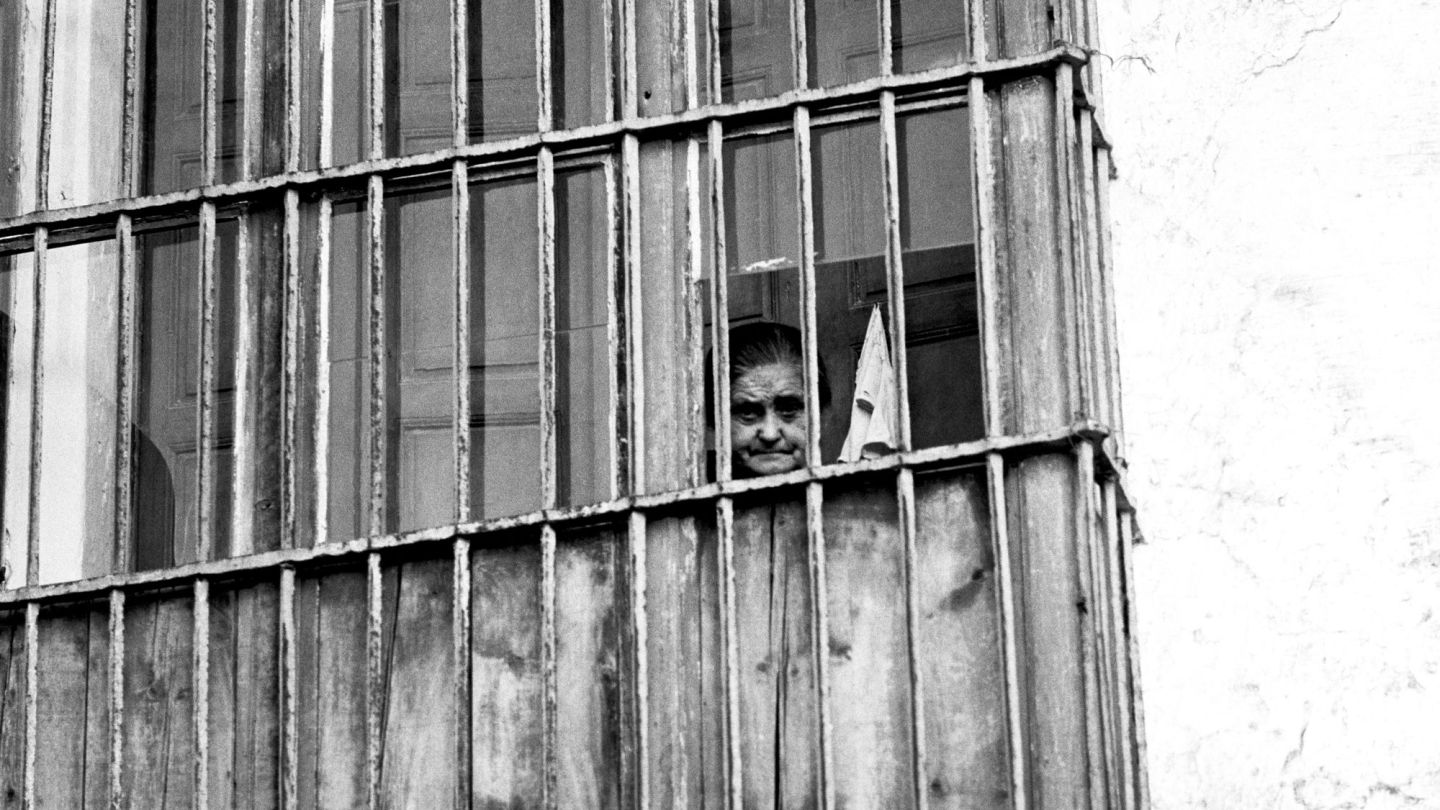
The first, History of a solitude, addresses with very powerful images the final stages of women's lives, which are truly harsh and which I want to think have significantly improved since they were photographed.
The second chapter, Female career with old age insurance, portrays the reality and ritual of matrimonial ceremonies, the usual destiny of women in those years who saw marriage as the essential milestone of their lives. I also think that in this aspect, without a doubt, our current reality, due among other factors to works like the one we are commenting on, has improved enormously.
Thirdly, in Work or job, more briefly, the world of women's work is discussed, in which it has been scorned and little valued, limiting it to less qualified jobs.
In Religion as a refuge, monastic life is illustrated, basically cloistered, which for many years was one of the outlets for single women with few matrimonial opportunities. And which condemned them to be part of a second-category estate within the church.
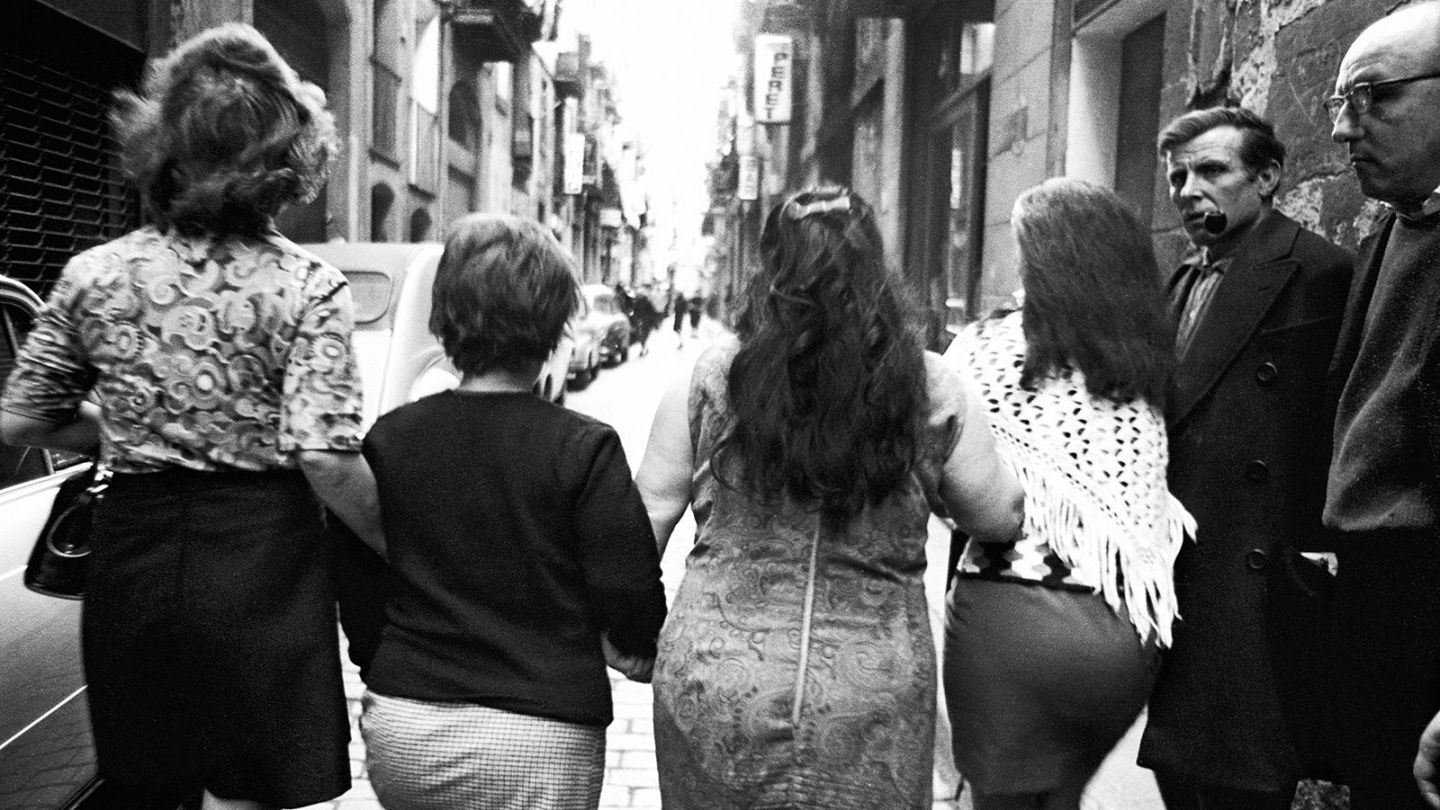
A risky profession addresses the topic of prostitution with powerful images of Barcelona's Chinese quarter that evoke those of Joan Colom in the same years and environments.
To quarter a body introduces us to the search for the ideal of femininity and the practice of eroticism that fragments the woman's body to make it more erotic and desirable.
The marginalized woman in society presents the harsh reality of poverty, focused especially on that of the Gypsy woman who has suffered life in marginalized neighborhoods and whom Colita masterfully portrays with images of women and children of great strength that move us.
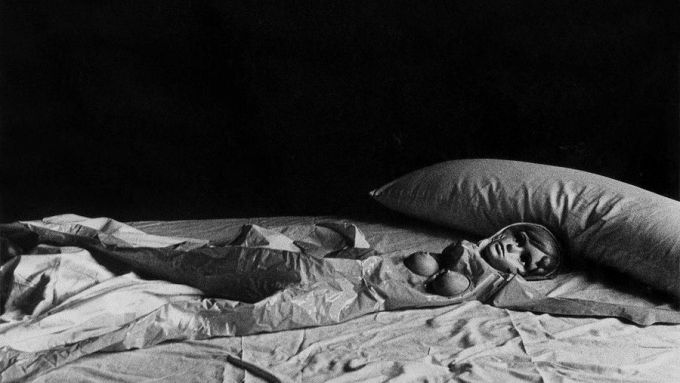
In The Art of Becoming a Thing it presents us with the demand to which women are subjected so that their physique conforms to the false archetypes that society has configured. A field it explores through the world of models, who constitute one of the main vehicles of this phenomenon today called objectification.
Overall, the re-edition of this book is a good example of the recovery of our rich photographic heritage and, at the same time, the opportunity to offer new generations the possibility of knowing the reality of the world of women from just seventy years ago and contemplating the undoubted progress that fortunately has been achieved little by little in this time.


