
The Finestres bookstore has inaugurated a new branch in Gràcia, dedicated to Palestine, where you can find essays, fiction, poetry, theater and all kinds of titles consecrated to the reality of this country. The bookstore opened this Friday, May 15, on Verdi street 17 in Barcelona, coinciding with the commemoration of the Nakba, with artistic performances and a parade. The Finestres Palestina bookstore will be a meeting place dedicated to the culture, thought and reality of the Palestinian people, with a broad and diverse purpose and a continuous program of activities that aim to open conversation, reflection and exchange.
The injustices of our time cross us much more than we would like to admit. Or, perhaps, much more than we dare to face. Domestic calm protects us, the illusion of a life sheltered between known walls, among beloved voices. And from here, almost without realizing it, we pronounce: this will never happen to us. But, who guarantees us a safe future? Who has promised us immunity from barbarism? The placidity of daily life clouds the lucidity with which we should allow ourselves to be affected by the lives of others, especially when these lives are reduced to figures, to fleeting headlines, to images consumed with the same speed with which they are forgotten. here are five titles you can find at the Finestres Palestina bookstore.
Resisting Extermination: Capital, Imperialism and Race in Palestine (Manifest), by Rafeef Ziadah, Adam Hanieh and Robert Knox makes an analytical and political reading of the Israeli-Palestinian conflict, from a materialist and anti-colonial perspective. The authors see the current war dynamic as the residue, the waste and the trace of a tug-of-war between settler colonialism, capitalism, imperialism and racialization. They shed light where the dominant narrative simplifies, depoliticizes and neutralizes. Submerged in dynamics of visual fragmentation, simplifying media frameworks and widespread disinformation, Resisting Extermination opposes mass narratives that describe Palestine as a “timeless” conflict, to dismantle the hegemonic image in a distant way, appealing to reflection before emotional wound.
The authors narrate the history of the Palestinian people as a society traversed by political, social, and class complexities, to give even more weight to their resilience and resistance. A people that emerges from fragmentation, from pain, from dispossession and daily persistence. Resisting extermination invites us to read Gaza from a more uncomfortable, but also more honest, position, and this allows us to become aware of what is often missing in public debate: the connectivity of war with its structural foundations, and the dialogue between current events and a history of dispossession that has never ceased to occur.
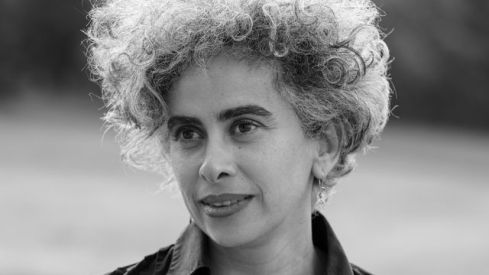
This same will to dismantle the dominant narrative runs through Un detall menor (Navona), by Adania Shibli, a novel that leads the reader to the heart of terror without needing to raise its voice. Shibli describes the Israeli military occupation from a dry, contained, almost aseptic writing, and it is precisely this lack of stridency that makes the latent terror in which Palestinians live emerge with greater force: the defenselessness against controls, barriers, altered maps, and erased villages. The author proposes a fight against imposed amnesia, battling against a violence that undoes bodies, spaces and, above all, memories.
Un crit pels infants de Gaza: veus, imatges i testimonis del genocidi (Ara Llibres) by Txell Feixas Torras and Cristina Mas Andreu is the counterpoint to a shared discourse. It is a cry. A cry that is born from children, but that summons an entire people: mothers, doctors, journalists, photographers, musicians, activists, and poets. The testimonies that make up the book show that pain and loss are shared. That tragedy does not corner itself in a single place, nor in a single voice. Each testimony occupies a place, has a name: Raji, Najwa, Sonia, Rima, Andream Ahmad, Rafeef. We know who speaks, from where, at what moment. Individuality combats dehumanization, transforms the discourse: we no longer cede space to victims, we show that they occupy space, that they are worthy of it. A Cry for the Children of Gaza is a book composed of fragments, short texts, and poems that give words to pain, but also to the face, the trace, and the body. Photographs and illustrations become one more fragment of the story of the lives that have been lost, and that are still being lost. The images force us to look. And looking is, here, also assuming responsibility. A book that becomes the literary testimony of what it means to die in life.
If I Must Die (Sembra) by Refaat Alareer breathes in gasps, as life does under bombs. It is a book traversed by multiple registers: historical reflection, personal memory, cultural essay, and poetry. Because only from this heterogeneity can it be shown that history erupts everywhere: inside the house, inside the classroom, inside love, inside language itself. Refaat Alareer, Palestinian poet, narrator, professor, translator, and activist from Gaza, assassinated in an Israeli bombing in December 2023, writes from this threshold. And he writes knowing that the word is one of the few things that can still defy the siege. Because he does not write from nostalgia, but from love for life, for culture, for the possibility of imagining a free Palestine even before it exists. There is in these pages a death that arrives not only as an end, but as a condition imposed on life itself; and, despite everything, a voice persists that resists it, that refuses to be reduced to ash, that continues to name the world even when the world collapses.
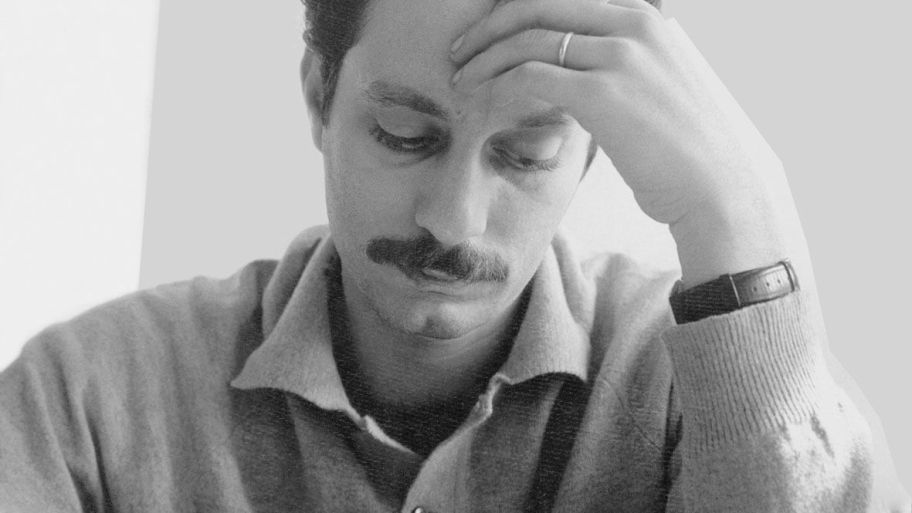
Gassan Kanafani returns to kilometer zero of the Palestinian wound with Return to Haifa and Men in the Sun (Club Editor), two short novels that speak to us of the Nakba, exile, and the loss of home. In Return to Haifa, Said and Safia return to a house that no longer belongs to them and face not only the material ruin of the past, but also a broken identity, embodied in that son they lost and who has grown up as an Israeli Jew. In Men in the Sun, on the other hand, three generations of Palestinian refugees cross the desert inside a tanker truck, trapped between the need to flee and the inability to take the reins of their own destiny. Kafani inscribes Palestine within a wounded consciousness that still seeks to persist; a literature that, even from defeat, continues to knock on the tank's wall to be heard.
We all deserve to love, right? We all deserve to be educated, right? We all deserve to live. Let them ask, then, the Palestinian people; the victims of an unprecedented genocide. To the children dead in life, for whom a death better than what living means, for them, awaits. As Greta Thunberg says, “be silent when children sleep, not when they are killed.” Here is a volume of books that teach us to look at the present and understand the antecedents, to combat the oblivion of those who deserve to love, learn, and live.


